Lowrance Eagle 4X Fish Finder Review: Features and Performance
Lowrance Eagle 4X fish finder review covering its 4-inch IPS display, bullet transducer, autotuning sonar, pros, cons, and who should buy it.
 By Caleb Morgan
Updated November 25, 2026
 By Caleb Morgan
Updated November 2026
The Lowrance Eagle 4X fish finder is a compact sonar unit built for anglers who want a clear screen, simple setup, and sonar coverage that works from a small boat, kayak, or bank-fishing setup. It suits beginners and budget-minded boaters who fish shallow to mid-depth water and want a straightforward display without a lot of menu depth. It is a weaker fit for offshore anglers who need large screens, mapping, or advanced side-imaging, and for anglers who plan to run multiple displays or sonar networks on a larger vessel.
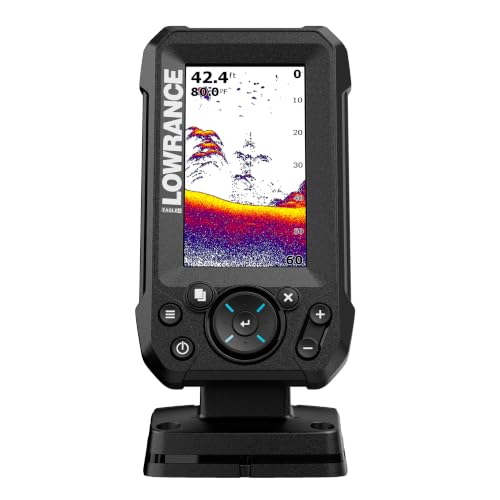
Lowrance Eagle 4X Fish Finder with Bullet Transducer | 4-inch IPS Display; wide-angle sonar coverage; autotuning sonar; easy twist-lock connector
Product Overview
The Lowrance Eagle 4X is a standalone sonar fish finder that pairs a 4-inch color display with a bullet-style transducer. It is aimed at the entry and mid-level part of the Lowrance lineup, where the goal is reliable sonar readings in a small footprint rather than charting or networked features. The listing emphasizes a wide-angle sonar view, autotuning sonar, and an easy twist-lock connector, which together point to a unit meant to be mounted and running quickly.
Its positioning is clear once you compare it with the rest of the Eagle and Lowrance family. Larger models in the same line add screen real estate and more advanced functions, while the 4X focuses on being the compact option. If you are weighing it against other compact Lowrance units, our guide to Lowrance Eagle Fish Finder Review: Features and Performance covers the broader Eagle family, and 7 Best Lowrance X4 Fish Finder Models Compared for Every Angler (2026) shows how the X4 series lines up against the 4X.
The unit is a sonar-first device. It shows depth, bottom structure, and fish arches on the screen, and it is best understood as a tool for locating fish and reading the bottom rather than as a navigation chartplotter. Anglers who want maps should look at a different category entirely, and our roundup of Top 7 Fish Finders with Maps Compared for Anglers (2026) covers that segment.
Key Features & Specifications
The table below lists the features named in the product listing. Where the listing does not state a figure, we have left it out rather than guess. Always confirm details against the manufacturer’s current documentation before buying.
| Feature | What the listing states or what it means |
|---|---|
| Display size | 4-inch IPS (in-plane switching) screen, which generally gives wider viewing angles than basic LCD panels |
| Transducer type | Bullet transducer, typically mounted on the transom or trolling motor bracket |
| Sonar coverage | Wide-angle sonar coverage for a broader view of the water column |
| Tuning | Autotuning sonar, which adjusts gain and related settings automatically |
| Connector | Easy twist-lock connector for attaching the transducer cable |
| Product category | Standalone fish finder (sonar display with transducer) |
If you are new to the terms in this table, What Is a Transducer on a Fish Finder? Transducer vs Display (2026) explains how the transducer and display work together, and What Is Chirp on a Fish Finder? CHIRP vs Standard Sonar (2026) covers why CHIRP is a different technology from the standard sonar the 4X uses.
Pros & Cons
Pros
- The 4-inch IPS display is generally easier to read from an angle than basic LCD screens, which helps when the unit is mounted at a steep angle or viewed by more than one person.
- Autotuning sonar reduces the amount of manual adjustment needed on the water, which suits anglers who are still learning how sonar gain and range interact.
- The twist-lock connector makes transducer hookup faster and reduces the chance of a loose connection in rough water.
- The compact footprint fits small boats, kayaks, and tight console spaces where a larger screen would crowd the helm.
- Wide-angle sonar gives a broader picture of the water below the boat, which can help when searching for bait schools and bottom structure.
Cons
- A 4-inch screen limits how much detail you can see at once, especially on longer depth ranges or when scrolling back through history.
- This is a sonar-focused unit, so it does not offer the mapping, charting, or networking features found on larger Lowrance and Garmin displays.
- Owners who expect fine-grained manual control over every sonar parameter may find the autotuning default limiting in some conditions.
- Bullet transducers are typically transom-mounted, which may not suit every hull or may require added hardware on some boats.
- Buyers planning to upgrade to side-imaging or down-imaging later will need to check compatibility with the transducer and display they choose now.
Performance Analysis
Performance for a sonar unit comes down to three things: how well the transducer sends and receives signals, how the display presents what comes back, and how the software handles gain and range. This review is based on the product listing specifications and on patterns that appear in owner discussions, not on hands-on testing, so the observations below describe what buyers commonly report rather than measured lab results.
On the display side, the 4-inch IPS panel is the most consistent point in owner feedback. IPS screens usually hold color and contrast better when viewed from the side, and that matters on a small boat where the screen is often mounted lower or angled toward the helm seat. Owners generally describe the picture as clear enough to read bottom contours and fish arches at typical freshwater and nearshore depths, though a 4-inch screen will feel crowded if you are trying to read a long depth scale at once.
The wide-angle sonar view is the feature most people ask about. A wider beam covers more water beneath the boat, which can help you spot bait and structure without moving the boat. The trade-off is that wider coverage can also show more clutter, and in heavy chop or on very uneven bottoms, readings can look busier. Owners who fish mostly shallow, clear water tend to be happy with the coverage, while those working deeper or rougher water often report needing to tune the unit more carefully.
Autotuning is designed to handle gain and related settings for you, and for many anglers it is the right default. Owner patterns suggest it does a good job in average conditions and that manual adjustment is still worth learning for specific situations, such as heavy weed cover or muddy water. If you want a deeper understanding of how sonar readings change with settings, What Does Fish Look Like on a Fish Finder? Sonar Signs Explained is a useful companion read.
Overall, the performance profile fits a compact, sonar-first unit. It is strongest for locating fish and bottom features in the range a small boat typically fishes, and it is limited by screen size and by the absence of mapping. Anglers should read the specifications against their own fishing style rather than treating any single feature as a universal answer.
Who Should Buy This Product?
The Lowrance Eagle 4X makes the most sense for a specific group of anglers. Beginners who want a clean, simple sonar display will find the autotuning and easy hookup useful. Small-boat owners, kayak anglers, and bank-side users who need a compact unit with a readable screen also fit the profile well. Anglers who fish mostly shallow to mid-depth water for species such as panfish, bass, or inshore fish tend to get the most out of it.
Skip this unit if you need mapping, charting, or networking. Offshore anglers who run long distances, use waypoints and charts, or want side-imaging to scan wide areas will be better served by a larger chartplotter-class display. Anglers who want maximum screen size for reading detailed history should also look higher in the lineup. Boat owners who plan to add a trolling motor display or a second unit should check how the 4X connects to their existing system before buying.
Buying Guide
Choosing a fish finder comes down to where you fish, what you want the unit to do, and how much screen you need. Start by listing your typical depth range, the type of water you fish, and whether you need mapping. A compact sonar unit like the 4X covers shallow to mid-depth sonar work well, but if your trips take you into deep or offshore water, a larger screen and chart features will serve you better.
Next, think about transducer type. Bullet transducers mount on the transom or trolling motor bracket and are common on small boats. Other transducer designs suit different hull styles and mounting options, and Top 7 Transducers for Fish Finder Models Compared for Every Angler (2026) walks through the main choices. Also consider whether you want CHIRP. CHIRP sends a range of frequencies and often gives sharper target separation than standard sonar, which can matter in fish-dense water.
If you are still deciding, these alternatives are worth comparing against the 4X:
- Garmin 010-01550-00 Striker 4 with Transducer – A 3.5-inch GPS fish finder with CHIRP sonar, useful if you want GPS features alongside sonar in a compact package.

Garmin 010-01550-00 Striker 4 with Transducer, 3.5" GPS Fishfinder with Chirp
- Garmin Striker Vivid 4cv Fishfinder with Transducer – A 4-inch LCD fish finder with scanning sonar and selectable color palettes, a close size match to the 4X for buyers who want a similar screen footprint with a different feature set.

Garmin Striker Vivid 4cv Fishfinder with Transducer – 4-inch LCD Display – Easy-to-Use Scanning Sonar – Color Palettes, 11.2 Ounces (010-02550-00)
For more options in this price-tier discussion without listing prices, see Top 7 Best Inexpensive Fish Finders for Budget Anglers (2026), and for a broader model comparison check Lowrance HOOK 7 Fish Finder Review: Features and Performance if you want a larger screen in the Lowrance family.
FAQ
Is the Lowrance Eagle 4X good for beginners?
It can be. Autotuning sonar and the simple twist-lock connector reduce setup and on-water adjustment, which helps anglers who are new to sonar. Beginners should still spend time learning how gain and range affect what appears on the screen. For another angle, check out Humminbird Fish Finder PiranhaMAX Review: Features and Performance.
Does the Lowrance Eagle 4X have GPS or mapping?
The product listing describes it as a sonar fish finder with a bullet transducer. It is not presented as a mapping or chartplotter unit, so anglers who need charts or waypoint navigation should compare it with mapping-capable displays before buying.
Is the 4-inch display big enough?
For a small boat or kayak, a 4-inch IPS screen is often enough to read bottom contours and fish marks. Anglers who want to see long depth histories or detailed side-by-side readings may find it cramped and should consider a larger display.
What kind of transducer does it use?
The listing names a bullet transducer. Bullet transducers are typically mounted on the transom or a trolling motor bracket. Check your boat’s mounting options and confirm the transducer fits your hull before purchase.
Is autotuning good enough, or do I need manual control?
Autotuning handles most typical conditions well and is a good starting point. Anglers who fish heavy cover, muddy water, or unusual bottoms often benefit from learning manual gain and range adjustments over time.
Can I use it on a kayak?
Many kayak anglers use compact sonar units, and the 4X’s size suits that use. Mounting options depend on your kayak’s setup, so plan the transducer and display placement before buying.
How does it compare with CHIRP units?
The listing does not describe the 4X as a CHIRP unit. CHIRP technology generally offers sharper target separation than standard sonar. If that matters for your fishing, compare the 4X with CHIRP-capable models such as the Garmin Striker 4 listed in the Buying Guide.
Should I consult a professional before installing a transducer?
If you are unsure about drilling, transom mounting, or wiring on your boat, consult a marine technician or the boat manufacturer. Improper installation can cause leaks or electrical problems.
Final Verdict
The Lowrance Eagle 4X fish finder is a practical, compact sonar unit for anglers who want a readable 4-inch IPS screen, wide-angle sonar coverage, and autotuning that does much of the setup for you. It is a good match for small boats, kayaks, and beginners fishing shallow to mid-depth water. It is not the right choice for anglers who need mapping, charting, or large-screen detail. Weigh the trade-offs against your fishing style, and if the screen size or feature set does not fit, compare the Garmin alternatives above before deciding.
View on AmazonBefore you buy: helpful guides
About Caleb Morgan
Caleb Morgan is part of our editorial team and reviews and edits our saltwater fishing guides, checking product details against manufacturer specifications and owner feedback.
About the author
Caleb Morgan writes reviews and buying guides for Saltwater Fishing.