Humminbird Fish Finder PiranhaMAX Review: Features and Performance
Humminbird fish finder PiranhaMAX review: specs, pros and cons, who it suits, and buying tips to help you decide if this dual beam sonar unit fits your boat.
 By Caleb Morgan
Updated November 24, 2026
 By Caleb Morgan
Updated November 2026
The Humminbird fish finder PiranhaMAX 4 is a compact, dual beam sonar unit aimed at anglers who want a straightforward way to see depth, structure and fish arches without paying for a large touchscreen chartplotter. It suits small boats, kayaks, bank-adjacent fishing on brackish water and anyone who fishes inshore or near-shore and mainly needs reliable bottom readings. It is a weaker fit for offshore anglers who need GPS mapping, side imaging or a large display for navigation, and for anglers who want modern touchscreen menus. Use the listing below to confirm the included transducer and mounting hardware before you buy.
Humminbird PiranhaMAX 4 Fish Finder with Transducer, Dual Beam Sonar
Product Overview
The PiranhaMAX 4 is part of Humminbird’s entry-level PiranhaMAX line, which has long been the brand’s answer to anglers who want a basic sounder without the complexity of a full multifunction display. The listing name identifies this unit as a 4-inch fish finder packaged with a transducer and featuring dual beam sonar. That combination is the core of the product: a small monochrome screen, a transducer that sends two sonar cones at once, and a set of controls for sensitivity, depth range and fish alarms.
Dual beam sonar is the main reason many anglers consider this class of unit. A narrow beam gives sharp detail directly beneath the boat, while a wider beam covers more area to either side. Used together, the display can show structure and suspended targets across a broader swath of water than a single-beam sounder. Humminbird’s PiranhaMAX line has generally been positioned for anglers who fish from small aluminum boats, pontoons, jon boats and kayaks, where space and power draw are limited and where a simple, bright display is more useful than a feature-heavy menu.
It is worth separating what the product is from what people sometimes expect it to be. The PiranhaMAX 4 is a sounder, not a chartplotter. It will tell you how deep the water is, what is directly under you and where fish-like returns appear, but it does not replace a dedicated GPS unit for navigation or waypoint-based route planning. Buyers who understand that distinction tend to be satisfied, while buyers who expect maps often feel let down.
Key Features & Specifications
The table below lists the specifications that the product name and the general PiranhaMAX line make clear. Where a detail is not confirmed by the listing name, it is omitted rather than estimated. Check the full Amazon specification sheet for exact dimensions, power requirements and transducer cable length before purchase.
| Feature | What It Means for You |
|---|---|
| Display size: 4 inches | Compact footprint that fits small consoles and kayak mounts; less screen area than larger Humminbird units. |
| Dual beam sonar | Two sonar cones at once: a narrow beam for detail and a wider beam for broader coverage. |
| Transducer included | The listing bundles the transducer, so you do not need a separate sonar purchase to get started. |
| Fish finder (sounder-only) | Shows depth, bottom contour, structure and fish-like targets; not a mapping or GPS unit. |
| Simple controls | Fewer menu layers than multifunction displays, which suits anglers who want quick access to sensitivity and depth range. |
Manufacturers typically specify the PiranhaMAX line for 12-volt boat power, which is common on small craft and makes it easy to run from a standard marine battery. Confirm the input voltage and current draw on the packaging, since these figures determine which battery and fuse you need. Mounting options are usually a bracket or swivel mount sold separately or included depending on the bundle, so review what ships in the box.
Pros & Cons
Pros
- Dual beam sonar gives broader coverage than a single narrow beam while still showing bottom detail.
- Transducer included in the bundle, which simplifies the purchase for first-time sounder owners.
- Compact screen suits small boats, kayaks and tight dash space.
- Simple button-driven interface with fewer menus to learn.
- Low-complexity setup for anglers who mainly need depth and bottom readings.
Cons
- No GPS or mapping, so it cannot store waypoints or display a chart.
- A 4-inch screen is harder to read in bright sun or at a distance than larger displays.
- Limited feature set compared with mid-range and premium Humminbird units.
- Transducer mounting and cable routing can take patience on some hulls.
- Not suited to anglers who rely on side imaging or detailed structure mapping.
Performance Analysis
Performance for a sounder like this comes down to three things: how well it resolves the bottom, how clearly it shows fish or suspended targets, and how readable the screen is under real conditions. Based on the product specifications and the patterns owners commonly describe, the PiranhaMAX 4 is generally regarded as competent for its class rather than exceptional.
On the bottom, dual beam sonar tends to give a clean, readable depth line in typical inshore and freshwater conditions. The narrow beam is the part to watch: it produces the detail you need to separate hard bottom from soft mud or to see a sharp edge. The wider beam helps you cover more water as you troll or drift, which is useful for locating structure without making constant passes. Owners often note that the bottom lock is steady in moderate chop, though very rough water and high-speed running can introduce noise, as is true of most sounders in this category.
Fish detection is where expectations need to be calibrated. A small sounder will show arches, marks and suspended returns, but interpreting them takes practice. Owners who learn to adjust sensitivity and gain tend to get the cleanest picture. Too much sensitivity fills the screen with clutter; too little hides smaller fish. Because the unit lacks advanced imaging, it cannot tell you the species or size of a target with confidence, so experienced anglers treat the readings as a guide to where to fish rather than a species identifier.
Screen readability is a practical limit. A 4-inch monochrome display is perfectly usable when mounted at eye level and kept out of direct glare, but it is smaller than many buyers expect. Mounting position matters more here than on larger units. A sunshade or a mount that tilts the screen away from overhead light helps considerably. Consult the owner’s manual on recommended brightness settings for your conditions.
Overall, the realistic performance profile is: dependable depth and bottom information, useful structure awareness for shallow to moderate depths, modest but usable fish marking, and limited utility for navigation. That profile matches the product’s intended role.
Who Should Buy This Product?
The PiranhaMAX 4 makes the most sense for anglers who fish from small boats, kayaks or pontoons and want to know depth, bottom makeup and where fish are likely holding without spending on a multifunction display. Inshore anglers working grass flats, oyster bars, sand edges and channel drops will find the bottom readings useful. Freshwater anglers fishing reservoirs, lakes and rivers for bass, crappie or panfish will also get good value from the depth and structure information.
Buy it if you are new to sounders and want a simple tool to learn on, if you need a second unit for a kayak or small skiff, or if your primary need is depth and bottom awareness rather than navigation. It is also a reasonable choice for anglers who already own a GPS plotter elsewhere and just want a dedicated sounder for a secondary boat.
Skip it if you fish offshore, run long distances, or depend on waypoints and charts. Skip it if you want side imaging or a large high-resolution screen, and skip it if you expect a modern touchscreen interface. Anglers in those situations will be happier with a larger Humminbird model that includes GPS and imaging, even though it costs more and takes up more console space.
Buying Guide
Before you commit to the PiranhaMAX 4, think through the decisions that matter most for a sounder purchase. Start with where you fish. Shallow inshore water and deep offshore water place different demands on a sounder, and a unit that handles a few dozen feet well may struggle at depths beyond what its power and transducer are rated for. Check the maximum depth rating in the product specifications against your typical fishing depth.
Next, decide whether you need navigation. If you want to mark spots, return to them, or see a chart, you need GPS, and a sounder-only unit will not meet that need. Plan for a unit with a chartplotter if navigation is part of your routine.
Mounting and power are the next checks. Confirm that the transducer can be mounted correctly on your hull type. Transom mounts, trolling motor mounts and through-hull installations each suit different boats, and the wrong choice can degrade readings. Make sure your battery or power source matches the unit’s voltage requirements, and use a fuse or breaker sized according to the manufacturer’s instructions.
When comparing alternatives, consider these well-known options. If you want the same entry-level sounder category with a slightly different configuration, the Humminbird Piranhamax 4 DI is a related model in the same family and is worth comparing on transducer type and bundle contents.

Humminbird Piranhamax 4 DI
If you need GPS, side imaging and a larger display, step up to the Humminbird XPLORE 12 GPS Fish Finder, which combines sonar with mapping and a bigger touchscreen. It suits anglers who fish larger water and want navigation integrated with their sounder, though it demands more mounting space and power planning.
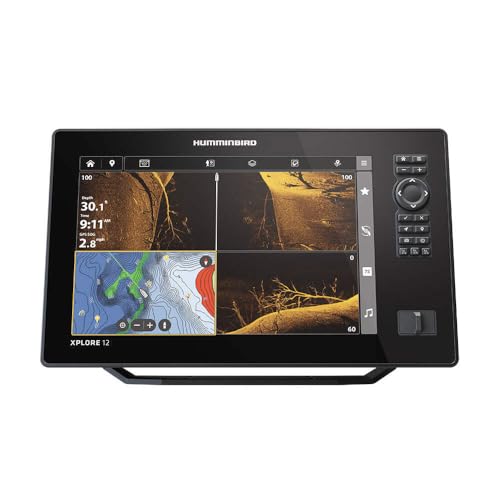
Humminbird XPLORE 12 GPS Fish Finder with Transducer, MEGA Side Imaging+ & HD Touchscreen
For a broader look at how these models stack up, see Humminbird Fish Finder Models: 6 Lineups Compared for Saltwater Anglers (2026) and Newest Humminbird Fish Finder: 5 Best Models Compared (2026). If you are weighing a sounder for a small craft, Humminbird Fish Finder Mount: How to Choose and Install One Right covers mounting options in detail, and What Is a Transducer on a Fish Finder? Transducer vs Display (2026) explains how the two halves of the system interact.
FAQ
Does the Humminbird PiranhaMAX 4 have GPS?
No. The PiranhaMAX 4 is a sounder-only unit. It shows depth, bottom structure and fish-like targets but does not include GPS or mapping. If you need waypoints or charts, look at a model in the GPS-equipped Humminbird range instead.
Is dual beam sonar better than single beam?
It depends on what you fish for. Dual beam sonar gives you a narrow beam for detail directly below the boat and a wider beam for broader coverage. For most inshore and freshwater anglers, that combination is more useful than a single beam, but it does not replace imaging or mapping for detailed structure work.
Can the PiranhaMAX 4 identify fish species?
Not reliably. A sounder like this shows arches, marks and returns that suggest fish presence, but it cannot confirm species or size with confidence. Experienced anglers use the readings to locate likely holding areas and then rely on their own knowledge and observation.
Will it work on a kayak?
Many owners use compact sounders like this on kayaks, provided the transducer can be mounted correctly and the power source is practical. Check the listing for power requirements and plan a battery and mount setup suited to a kayak’s limited space and weight capacity.
Is the included transducer enough for saltwater use?
The listing bundles a transducer, but suitability for saltwater depends on the transducer type and the conditions you fish. Confirm the transducer’s rating and mounting style in the product specifications, and remember that saltwater can accelerate corrosion, so rinse the unit and mounting hardware after use.
How do I improve screen readability in sunlight?
Mount the screen at eye level, angle it away from overhead sun and use a sunshade where possible. Adjust brightness and contrast in the menu for your conditions. A smaller screen is always harder to read at a distance, so position matters.
Should I buy this or a larger Humminbird?
If your fishing is shallow to moderate depth, your boat is small and you do not need navigation, the PiranhaMAX 4 is a sensible choice. If you need GPS, larger displays or side imaging, a larger Humminbird model will serve you better, even though it requires more planning for mounting and power. For specific models in that range, see Fish Finder Humminbird Helix 5 Review: Is It Worth It? and 6 Best Humminbird Fish Finders with GPS Models for Every Angler (2026).
Final Verdict
Is the Humminbird PiranhaMAX 4 worth it?
For the right angler, yes. The PiranhaMAX 4 delivers what its name promises: dual beam sonar, a bundled transducer and a compact screen that handles depth and bottom readings well in typical inshore and freshwater conditions. It is not a navigation tool, its small screen limits readability at a distance, and it lacks the imaging and mapping of larger units. Buy it if you need a simple, dependable sounder for a small boat or kayak and you understand its limits. Skip it if you need GPS, side imaging or a large display, and look at the alternatives above instead.
View on AmazonPricing, availability and specifications can change. Confirm current details on the Amazon listing before purchase, and consult a marine electronics professional if you are unsure about transducer mounting or power wiring.
Before you buy: helpful guides
About Caleb Morgan
Caleb Morgan is part of our editorial team and reviews and edits our saltwater fishing guides, checking product details against manufacturer specifications and owner feedback.
About the author
Caleb Morgan writes reviews and buying guides for Saltwater Fishing.