7 Best Belly Boat Fish Finder Options for Every Angler (2026)
Compare the 7 best belly boat fish finder options for kayak and float anglers, with specs, pros, cons and clear picks for every budget and need.
 By Caleb Morgan
Updated November 10, 2026
 By Caleb Morgan
Updated November 2026
Anglers who fish from a belly boat need a fish finder that is light, easy to mount on a float tube or sit-on-top, and simple to run while sitting low on the water. This guide compares seven belly boat fish finder models using the criteria that matter most in this setup: weight and portability, transducer type, display readability in sun, battery life, mounting options, and how well each unit handles shallow and deep water. Every pick below is drawn from manufacturer specifications, brand track record, and patterns that owners commonly report, so you can match a unit to how you actually fish.
Our top picks at a glance
- 1TOP CHOICEBest overallGarmin 010-01550-00 Striker 4 with Transducer, 3.5" GPS Fishfinder with ChirpView on Amazon
- 2
 TOP CHOICEBest for fully wireless setupsVenterior Portable Rechargeable Fish Finder Wireless Sonar Sensor Fishfinder Depth LocatorView on Amazon
- 3
 TOP CHOICEBest for castable useLUCKY Kayak Portable Fish Depth Finder Water Handheld Fish Finder Sonar CastableView on Amazon
- 4
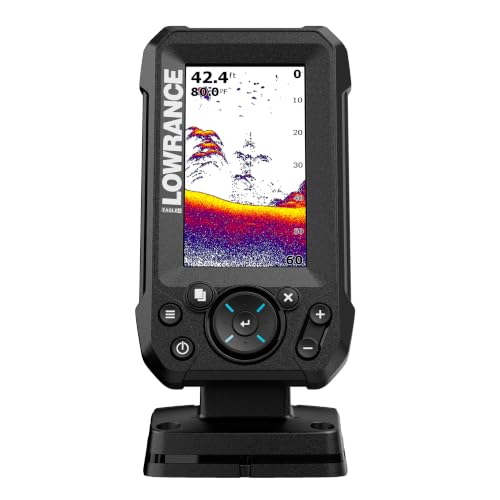 Best for bright sun and clear screensLowrance Eagle 4X Fish Finder with Bullet TransducerView on Amazon
- 5
 Best for color scanning sonarGarmin Striker Vivid 4cv Fishfinder with TransducerView on Amazon
- 6
 Best for a larger screenGarmin Striker Vivid 7cv, U.S. with GT20-TM TransducerView on Amazon
- 7
 Best budget pickHumminbird PiranhaMAX 4 Fish Finder with Transducer, Dual Beam SonarView on Amazon
Our Top Picks
Quick Comparison
| Product | Best for | Key feature |
|---|---|---|
| Garmin 010-01550-00 Striker 4 with Transducer | Best overall | CHIRP sonar with GPS |
| Venterior Portable Rechargeable Fish Finder | Fully wireless setups | Rechargeable wireless sensor |
| LUCKY Kayak Portable Fish Depth Finder | Castable use | Handheld castable transducer |
| Lowrance Eagle 4X Fish Finder | Bright sun and clear screens | 4-inch IPS display |
| Garmin Striker Vivid 4cv Fishfinder | Color scanning sonar | Scanning sonar with color palettes |
| Garmin Striker Vivid 7cv | Larger screen | 7-inch color display |
| Humminbird PiranhaMAX 4 Fish Finder | Budget-minded anglers | Dual beam sonar |
Garmin 010-01550-00 Striker 4 with Transducer, 3.5″ GPS Fishfinder with Chirp
Garmin 010-01550-00 Striker 4 with Transducer, 3.5" GPS Fishfinder with Chirp
Best for: Best overall
This unit suits belly boat anglers who want a dependable, straightforward finder with GPS waypoint marking and CHIRP sonar for clearer target separation. It is a good fit for anglers who fish both shallow flats and deeper structure and want one unit that handles both.
Key specs
- 3.5-inch display
- GPS-enabled
- CHIRP sonar
- Includes transducer
Pros
- CHIRP sonar gives sharper fish arches and bottom detail
- GPS waypoints help you return to productive spots
- Well-established brand with broad owner support
Cons
- Screen is smaller than the larger Striker models
- Mounting hardware requires some setup on a float tube
Bottom line: A strong first choice for belly boat anglers who want reliable sonar and GPS in one compact package.
View on AmazonVenterior Portable Rechargeable Fish Finder Wireless Sonar Sensor Fishfinder Depth Locator
Venterior Portable Rechargeable Fish Finder Wireless Sonar Sensor Fishfinder Depth Locator with Fish Size, Temperature, Bottom Contour, Color Display
Best for: Fully wireless setups
This is a wireless sensor-and-display design, which means you can cast or drop the sensor and read the screen from your seat without running a transducer cable across the float. It works well for anglers fishing small ponds, lakes and sheltered coves.
Key specs
- Rechargeable unit
- Wireless sonar sensor
- Displays fish size, temperature and bottom contour
Pros
- No cable runs to manage on a belly boat
- Rechargeable design reduces disposable battery use
- Shows depth, temperature and bottom contour in one view
Cons
- Wireless range is limited compared with wired transducers
- Owners often note the screen is smaller and harder to read in direct sun
Bottom line: Best for anglers who want a simple, cable-free setup for calm, shallow water.
View on AmazonLUCKY Kayak Portable Fish Depth Finder Water Handheld Fish Finder Sonar Castable
LUCKY Kayak Portable Fish Depth Finder Water Handheld Fish Finder Sonar Castable Kayak Boat Fishfinder Transducer Fishing LCD Display FFC1108
Best for: Castable use
A castable, handheld-style finder is useful when you want to scout a spot before committing your float or when you fish from a belly boat in several different lakes in one trip. It is aimed at anglers who value light weight and fast setup over large-screen detail.
Key specs
- Castable sonar transducer
- LCD display
- Handheld, kayak-friendly design
Pros
- Very light and quick to deploy
- Useful for scouting depth and bottom changes
- Easy to move between spots without re-mounting
Cons
- Display detail is basic compared with full-size units
- Battery and cable routing need attention in rough water
Bottom line: A practical scouting tool for anglers who move often and want depth readings without a permanent mount.
View on AmazonLowrance Eagle 4X Fish Finder with Bullet Transducer
Lowrance Eagle 4X Fish Finder with Bullet Transducer | 4-inch IPS Display; wide-angle sonar coverage; autotuning sonar; easy twist-lock connector
Best for: Bright sun and clear screens
The 4-inch IPS display is the main draw here. IPS panels generally hold better viewing angles than basic LCDs, which matters when you are sitting low on the water and the glare is strong. It suits anglers who fish open water in full sun.
Key specs
- 4-inch IPS display
- Bullet transducer
- Autotuning sonar
- Twist-lock connector
Pros
- IPS display is easier to read at angles and in glare
- Autotuning simplifies setup for new users
- Twist-lock connector makes transducer changes quicker
Cons
- Bullet transducer mounting needs a stable hull or float attachment
- No built-in GPS, which some anglers want
Bottom line: A clear-screen choice for anglers who fish open water in strong sunlight and want simple operation.
View on AmazonGarmin Striker Vivid 4cv Fishfinder with Transducer
Garmin Striker Vivid 4cv Fishfinder with Transducer – 4-inch LCD Display – Easy-to-Use Scanning Sonar – Color Palettes, 11.2 Ounces (010-02550-00)
Best for: Color scanning sonar
The Vivid line adds scanning sonar and color palettes, which give a more detailed picture of structure and suspended fish. It fits anglers who like to read the bottom in detail and want a color screen in a compact size.
Key specs
- 4-inch LCD display
- Scanning sonar
- Color palettes
- Includes transducer
Pros
- Scanning sonar shows structure to the sides, not just below
- Color palettes help separate fish from bottom clutter
- Light enough for float-based use
Cons
- Smaller screen can feel cramped for detailed map work
- Scanning features use more power than basic sonar modes
Bottom line: A good pick for anglers who want scanning sonar and color in a compact belly boat-friendly unit.
View on AmazonGarmin Striker Vivid 7cv, U.S. with GT20-TM Transducer
Garmin Striker Vivid 7cv, U.S. with GT20-TM Transducer – Easy-to-Use 7-inch Color Fishfinder and Sonar Transducer, Vivid Scanning Sonar Color Palettes (010-02552-00)
Best for: Larger screen
The 7-inch screen gives more room for sonar history, depth and bottom detail at a glance. This is for anglers whose float or belly boat setup can handle a bigger head unit and who fish structure-heavy water where screen size helps.
Key specs
- 7-inch color display
- Scanning sonar
- GT20-TM transducer
Pros
- Larger screen is easier to read at a glance
- Scanning sonar and color palettes carry over from smaller Vivid models
- Good for reading complex bottom structure
Cons
- Bulkier and heavier than compact units, which matters on a belly boat
- Requires more power and a sturdier mount
Bottom line: Worth the extra bulk for anglers who prioritize screen size and fish complex structure.
View on AmazonHumminbird PiranhaMAX 4 Fish Finder with Transducer, Dual Beam Sonar
Humminbird PiranhaMAX 4 Fish Finder with Transducer, Dual Beam Sonar
Best for: Budget-minded anglers
Dual beam sonar covers both a narrow center beam for detail and a wider beam for coverage. This is a practical option for anglers who want a no-frills unit for basic depth and fish marking without paying for extras they will not use.
Key specs
- 4-inch display
- Dual beam sonar
- Includes transducer
Pros
- Dual beam sonar gives both coverage and detail
- Simple menus for quick use on the water
- Budget-friendly choice within the Humminbird lineup
Cons
- Lacks the scanning and color features of higher-end models
- Screen is basic for anglers who want detailed mapping
Bottom line: A sensible choice for anglers who need dependable depth and fish marking on a tighter budget.
View on AmazonBuying Guide
Weight and Portability
On a belly boat, every ounce matters. Check the weight of the head unit, transducer and mounting hardware together. Units under about one pound combined are easier to carry in and out of the water, while larger screens can add significant bulk to a float setup.
Good picks for this: LUCKY Kayak Portable Fish Depth Finder, Garmin Striker Vivid 4cv Fishfinder
Transducer Type
Transducers come in through-hull, transom-mount, bullet and castable styles. Belly boat anglers usually choose a castable or float-mounted transducer, since through-hull mounting is not an option. Check the cable length and whether the transducer can be stored safely when you are not using it.
Good picks for this: LUCKY Kayak Portable Fish Depth Finder, Venterior Portable Rechargeable Fish Finder
Display Readability in Sunlight
Sitting low on the water means glare off the surface is strong. IPS and high-contrast screens generally hold up better than basic LCD panels. Look for brightness control and anti-glare coating if you fish open, sunny water.
Good picks for this: Lowrance Eagle 4X Fish Finder, Garmin Striker Vivid 7cv
Battery Life and Power Source
Check whether the unit runs on internal rechargeable cells, external batteries or a 12-volt supply. Manufacturers typically specify runtime at a given brightness and sonar mode, so compare those figures under similar conditions. Carry a spare battery for longer outings.
Good picks for this: Venterior Portable Rechargeable Fish Finder, Humminbird PiranhaMAX 4 Fish Finder
Sonar Technology
CHIRP sonar sends a sweep of frequencies and typically separates targets more clearly than single-frequency sonar. Scanning sonar shows what is off to the sides of the boat. Dual beam sonar offers a balance of coverage and detail. Pick the technology that matches your fishing, whether you target structure, suspended fish or both.
Good picks for this: Garmin 010-01550-00 Striker 4 with Transducer, Garmin Striker Vivid 4cv Fishfinder
Mounting and Compatibility
Belly boats and float tubes lack the fixed mounting points of a hard hull. Look for units with flexible or clamp-style mounts, and confirm that the transducer can be secured without shifting in current. Test the setup in a calm spot before heading out.
Good picks for this: Lowrance Eagle 4X Fish Finder, Garmin 010-01550-00 Striker 4 with Transducer
Durability and Water Resistance
Look for a waterproof rating printed in the manufacturer specifications, and check the cable connectors for sealing. Rinse the unit with fresh water after saltwater use and store it dry. Owners often report that connector seals and cable strain are the most common points of failure, so inspect them before each trip.
Good picks for this: Garmin Striker Vivid 4cv Fishfinder, Humminbird PiranhaMAX 4 Fish Finder
FAQ
What is the best fish finder for a belly boat?
For most belly boat anglers, a compact unit with CHIRP or scanning sonar and a clear display works best. The Garmin Striker 4 is a strong all-around choice, while the Venterior wireless unit suits anglers who want no cables.
Can I use a castable fish finder from a belly boat?
Yes. Castable units let you scout depth and bottom structure without mounting a transducer to the float. They are useful for quick checks in unfamiliar water, though screen detail is usually more limited than on mounted units.
Do I need GPS on a belly boat fish finder?
GPS is useful if you want to mark productive spots and return to them, but it is not essential. Many belly boat anglers fish small, familiar waters where visual landmarks are enough. Consider GPS if you travel across larger lakes.
How do I mount a fish finder on a belly boat?
Use a stable clamp or float-specific mount, and position the transducer in clear water away from the kick of your fins. Secure all cables so they do not snag on gear. Check the mount before every trip, since float tubes flex more than hard hulls.
How long do fish finder batteries last?
Runtime depends on screen brightness, sonar mode and battery capacity. Manufacturers usually list runtime figures under specific conditions, so check those specs and plan for a spare battery on longer outings.
Is a color screen worth it for a belly boat?
A color screen can make it easier to separate fish arches from bottom clutter, especially with color palettes. It uses more power than monochrome, so weigh the benefit against battery life if you fish long sessions.
Should I consult a professional before buying?
For most purchases, the manufacturer’s documentation and a local tackle shop can answer setup questions. If you plan to mount equipment on a float or kayak in rough water, consider asking a qualified marine service professional for guidance on mounting and electrical safety.
Conclusion
The right belly boat fish finder depends on how you fish. The Garmin Striker 4 is a well-rounded pick for most anglers, the Venterior wireless unit suits cable-free calm-water fishing, and the LUCKY castable finder is a practical scouting tool. Anglers who fish sunny open water should look at the Lowrance Eagle 4X for its IPS display, while those who want color scanning sonar will find the Striker Vivid 4cv a good compact option. If screen size matters most, the Striker Vivid 7cv offers more room but adds bulk. The Humminbird PiranhaMAX 4 is a sensible budget choice for basic depth and fish marking. Match the transducer type, screen, and weight to your float setup and the water you fish most.
Sources
- Water depth, bottom mapping and aquatic habitat data that can help you interpret sonar readings on lakes and rivers (usgs.gov)
- Boating safety guidance, including life jacket and equipment recommendations for small craft and float use (uscg.mil)
- State fishing regulations and water-specific guidance that apply to belly boat anglers (wildlife.ca.gov)
Related reading
- Top 5 Portable Fish Finder Depth Finder Picks for Shore, Kayak and Boat
- Top 5 Fish Finders with Camera Picks for Shore, Kayak and Boat
- Top 5 Best Jon Boat Fish Finder Picks Compared for Anglers
- Depth Fish Finder for Boat: How to Choose and Use One (2026)
- Budget Friendly Fish Finder: 3 Best Picks for Shore, Kayak and Boat
- 7 Best Pontoon Boat Fish Finders for Every Angler (2026)
About Caleb Morgan
Caleb Morgan is part of our editorial team and reviews and edits our saltwater fishing guides, checking product details against manufacturer specifications and owner feedback.
About the author
Caleb Morgan writes reviews and buying guides for Saltwater Fishing.