Cheapest Fish Finder with Side Imaging: 6 Best Picks Compared (2026)
Looking for the cheapest fish finder with side imaging? Compare six models by features, display size, and owner feedback to find the right value for your boat.
 By Caleb Morgan
Updated November 10, 2026
 By Caleb Morgan
Updated November 2026
Shoppers searching for the cheapest fish finder with side imaging usually want one thing: a unit that shows the bottom and structure to the sides of the boat without the premium price of a full chartplotter bundle. Side imaging, sometimes called side scan, paints a picture of the lake or sea floor out to the left and right of your hull, which makes it far easier to find brush piles, drop-offs, and baitfish schools than a traditional single-beam sounder. This list focuses on the criteria that matter most when money is tight: sonar technology, screen size, mapping capability, transducer compatibility, and the kinds of feedback owners commonly report after months on the water.
Our top picks at a glance
- 1TOP CHOICEBest overallGarmin Striker Vivid 7svView on Amazon
- 2
 TOP CHOICEBest for compact boatsGarmin Striker Vivid 7cvView on Amazon
- 3
 TOP CHOICEBest budget pickLowrance Eagle 5 SplitShot HD with C-MAP Inland ChartsView on Amazon
- 4
 Best for larger screensLowrance Eagle 7 SplitShot HD with C-MAP Inland ChartsView on Amazon
- 5
 Best for mapping on a budgetHumminbird Helix 5 G3 GPS Fish Finder with TransducerView on Amazon
- 6
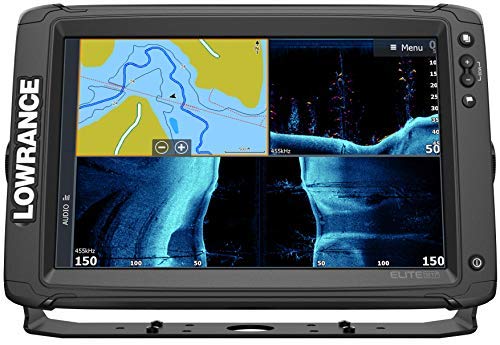 Best for wireless networkingElite-12 Ti2 Fish Finder with Active Imaging 3-in-1 TransducerView on Amazon
Our Top Picks
Quick Comparison
| Product | Best for | Key feature |
|---|---|---|
| Garmin Striker Vivid 7sv | Overall value with side imaging | 7-inch color display with Vivid scanning sonar palettes |
| Garmin Striker Vivid 7cv | Compact boats and kayaks | 7-inch display bundled with GT20-TM transducer |
| Lowrance Eagle 5 SplitShot HD | Budget-focused anglers | Compact 5-inch IPS screen with SplitShot transducer options |
| Lowrance Eagle 7 SplitShot HD | Easier viewing on mid-size boats | 7-inch IPS display with DownScan and FishReveal |
| Humminbird Helix 5 G3 | Mapping and GPS on a modest budget | Dual Spectrum CHIRP sonar with GPS |
| Elite-12 Ti2 | Wireless networking and large-screen viewing | 12-inch display with active imaging 3-in-1 transducer |
Garmin Striker Vivid 7sv
Garmin Striker Vivid 7sv, Easy-to-Use 7-inch Color Fishfinder and Sonar Transducer, Vivid Scanning Sonar Color Palettes (010-02553-00)
Best for: Overall value with side imaging
This model suits anglers who want a dependable side-imaging unit with a bright, easy-to-read screen and a straightforward menu system. It is a sensible first purchase for lake and reservoir fishing from a small to mid-size boat.
Key specs
- 7-inch color display
- Vivid scanning sonar color palettes
- Sonar transducer included in the listing
Pros
- Clear color palettes make bottom contours easy to interpret
- Simple, quick-start interface suited to beginners
- Strong brand support and widely available accessories
Cons
- Lacks the larger screen real estate of 9-inch and up models
- Advanced mapping features require additional chart purchases
Bottom line: A strong choice for anglers who want reliable side imaging without paying for features they will not use.
View on AmazonGarmin Striker Vivid 7cv
Garmin Striker Vivid 7cv, U.S. with GT20-TM Transducer – Easy-to-Use 7-inch Color Fishfinder and Sonar Transducer, Vivid Scanning Sonar Color Palettes (010-02552-00)
Best for: Compact boats and kayaks
The 7cv pairs the same 7-inch Vivid display with a GT20-TM transducer, making it a practical pick for smaller craft where mounting space and power draw are limited.
Key specs
- 7-inch color display
- GT20-TM transducer included
- Vivid scanning sonar color palettes
Pros
- Bundled transducer simplifies setup
- Good visibility in bright conditions for a unit this size
- Compact footprint suits kayaks and small jon boats
Cons
- Transducer choice is fixed, so upgrading later means buying separately
- Smaller screen can feel cramped when comparing side-scan views
Bottom line: Best for anglers with small boats who want an all-in-one bundle and minimal installation work.
View on AmazonLowrance Eagle 5 SplitShot HD with C-MAP Inland Charts
Lowrance Eagle 5 SplitShot HD Fish Finder with C-MAP Inland Charts | 5-inch IPS Display; CHIRP and DownScan with FishReveal; autotuning sonar; Genesis Live mapping; easy twist-lock connector
Best for: Budget-focused anglers
Anglers working with a tight budget who still want CHIRP sonar, DownScan imaging, and autotuning will find this 5-inch unit a sensible starting point. The compact size also fits well on console or bass boat dashboards.
Key specs
- 5-inch IPS display
- CHIRP and DownScan with FishReveal
- Autotuning sonar and Genesis Live mapping
- Twist-lock connector
Pros
- Autotuning reduces the time spent adjusting settings
- Compact size fits tight dash spaces
- Twist-lock connector simplifies installation and removal
Cons
- Smaller screen limits detail when viewing side imaging at distance
- Some advanced features depend on optional chart and transducer purchases
Bottom line: The most economical way into the SplitShot line for anglers who prioritize price over screen size.
View on AmazonLowrance Eagle 7 SplitShot HD with C-MAP Inland Charts
Lowrance Eagle 7 SplitShot HD Fish Finder with C-MAP Inland Charts | 7-inch IPS Display; CHIRP and DownScan with FishReveal; autotuning sonar; Genesis Live mapping; easy twist-lock connector
Best for: Easier viewing on mid-size boats
This 7-inch version offers the same sonar feature set as the 5-inch model with a larger, easier-to-read display. It suits anglers who regularly run side-imaging views and want more detail without moving up to a much larger unit.
Key specs
- 7-inch IPS display
- CHIRP and DownScan with FishReveal
- Autotuning sonar and Genesis Live mapping
- Easy twist-lock connector
Pros
- Larger screen makes side-imaging detail easier to interpret
- Autotuning helps less experienced users get consistent results
- Genesis Live mapping supports real-time contour building
Cons
- Costs more than the 5-inch version, so budget is a factor
- Full mapping benefits depend on chart availability for your waters
Bottom line: A good middle ground for anglers who want a bigger screen without stepping up to a large-format chartplotter.
View on AmazonHumminbird Helix 5 G3 GPS Fish Finder with Transducer
Humminbird Helix 5 G3 GPS Fish Finder with Transducer & Dual Spectrum Chirp Sonar
Best for: Mapping and GPS on a modest budget
Anglers who want GPS waypoints and Dual Spectrum CHIRP sonar in a compact package will find the Helix 5 G3 a practical option. It is well suited to users who plan to mark spots and return to them often.
Key specs
- Dual Spectrum CHIRP sonar
- GPS receiver
- Transducer included in the listing
Pros
- GPS waypoint marking is useful for repeat trips
- Dual Spectrum CHIRP gives flexibility between broad and detailed views
- Included transducer simplifies first-time setup
Cons
- Screen is smaller than many anglers prefer for side-imaging detail
- Menu layout takes some time to learn for new users
Bottom line: Ideal for anglers who value mapping and waypoints above screen size, provided they accept a learning curve.
View on AmazonElite-12 Ti2 Fish Finder with Active Imaging 3-in-1 Transducer
Elite-12 Ti2-12-inch Fish Finder Active Imaging 3-in-1Transducer, Wireless Networking, Real-Time Map Creation Preloaded C-MAP US Inland Mapping …
Best for: Wireless networking and large-screen viewing
The Elite-12 Ti2 is the largest unit in this comparison, with a 12-inch display and wireless networking support. It is aimed at anglers who want the most screen area for side-imaging and mapping and who have room on the helm for a bigger installation.
Key specs
- 12-inch display
- Active imaging 3-in-1 transducer
- Wireless networking
- Preloaded C-MAP US Inland mapping
Pros
- Large screen provides the most detail of any model listed
- Wireless networking allows phone and tablet connection
- Preloaded mapping adds value out of the box
Cons
- Physically large and may not fit smaller dashboards
- Higher power draw than compact units
Bottom line: The right choice for larger boats and anglers who want maximum screen real estate, despite the bigger footprint.
View on AmazonBuying Guide
Side imaging versus traditional sonar
Side imaging transmits beams to the left and right of the boat, producing a picture of the bottom out to roughly 100 to 200 feet on each side depending on the model and water conditions. Traditional single-beam sonar only shows what is directly below. For finding structure and suspended fish, side imaging is the bigger advantage. Manufacturers typically specify maximum side-scan range, so compare that number when weighing options.
Good picks for this: Garmin Striker Vivid 7sv, Lowrance Eagle 7 SplitShot HD
Screen size and resolution
Screen size directly affects how much side-scan detail you can read at a glance. A 5-inch display is compact but can make small targets harder to separate. A 7-inch screen is a practical middle ground, while 12-inch units give the most room. Check the stated resolution as well, since sharper pixels help when interpreting fine bottom texture.
Good picks for this: Lowrance Eagle 5 SplitShot HD, Elite-12 Ti2
Transducer type and compatibility
The transducer is the part that sends and receives sound, and it determines which imaging modes you get. Some bundles include a transducer, while others require a separate purchase. Confirm which transducer comes with the unit and whether it supports the side-imaging mode you want. Mismatched transducers are a common source of disappointment.
Good picks for this: Garmin Striker Vivid 7cv, Humminbird Helix 5 G3
Mapping and chart support
Built-in or preloaded mapping can save significant time on unfamiliar water. Check whether the chart coverage matches your home lake or coastline, and whether updates are available. GPS waypoint marking is useful for returning to productive spots, but it works best when paired with reliable charts.
Good picks for this: Humminbird Helix 5 G3, Lowrance Eagle 7 SplitShot HD
Boat size and mounting
Measure your dash or console before buying. Compact units like the 5-inch models fit small craft, while larger screens need more clearance and a stable mounting surface. Check the mounting hardware included and whether a gimbal or flush-mount option is available. Consult the manufacturer’s installation guide for specific clearance requirements.
Good picks for this: Garmin Striker Vivid 7cv, Lowrance Eagle 5 SplitShot HD
Power draw and battery use
Power consumption matters most on kayaks, jon boats, and any setup running off a single battery. Smaller screens generally draw less power, and some units offer adjustable backlight settings. Review the stated current draw in the specifications and plan your battery capacity accordingly.
Good picks for this: Garmin Striker Vivid 7sv, Lowrance Eagle 5 SplitShot HD
Durability and weather resistance
Marine electronics face spray, sun, and temperature swings. Look for an IP rating or a clear waterproofing statement from the manufacturer, and check whether the screen is treated for glare. Owners often report that a sunshade or protective cover extends the life of the display, particularly on open boats.
Good picks for this: Lowrance Eagle 7 SplitShot HD, Elite-12 Ti2
FAQ
What is the cheapest fish finder with side imaging?
Among the models in this guide, the compact Lowrance Eagle 5 SplitShot HD is positioned as the budget-focused option, with side imaging and DownScan available in a small package. Actual pricing changes often, so compare current listings before deciding.
Can a basic fish finder add side imaging later?
Usually not. Side imaging requires a compatible transducer and display, so the easiest route is to buy a unit that supports it from the start. Check the transducer specifications before purchase.
How deep can side imaging see?
Range depends on the model, water clarity, and frequency used. Manufacturers typically state a maximum side-scan range, and actual performance varies with bottom type and conditions. Use the specified range as a guide, not a guarantee.
Do I need charts if I already have side imaging?
Charts are not required for side imaging itself, but they help with navigation and mapping. Many anglers find preloaded or downloadable charts useful on unfamiliar water.
Is a larger screen always better?
Not necessarily. Larger screens show more detail, but they require more dash space and draw more power. Match the screen size to your boat and typical fishing style.
Can I mount a fish finder on a kayak?
Yes, but compact units and low-profile mounts work best. Make sure the transducer can be installed securely and that the display is visible from your seated position. Consult the manufacturer’s mounting guidance for your specific kayak.
How do I maintain a fish finder?
Rinse the unit with fresh water after saltwater trips, keep the transducer clean, and store the display out of direct sun when not in use. Check connections periodically for corrosion.
Conclusion
The cheapest fish finder with side imaging depends on your boat, your budget, and how much screen detail you need. The Lowrance Eagle 5 SplitShot HD is the most economical entry point in this list, while the Garmin Striker Vivid 7sv offers a well-rounded balance for most lake anglers. The Humminbird Helix 5 G3 suits anglers who prioritize GPS waypoints, and the Elite-12 Ti2 serves those who want the largest screen. Compare the specifications against your own setup, and consult a marine electronics professional if you are unsure about transducer compatibility or installation.
Sources
- Charts, bathymetry data and navigation safety information for U.S. coastal and inland waters (noaa.gov)
- Boating safety standards, equipment requirements and on-water navigation guidance (uscg.mil)
- Fisheries management resources and habitat information relevant to structure-oriented fishing (fws.gov)
Related reading
- 5 Best Fish Finders with Side Imaging: Top Picks Compared (2026)
- Yakattack Fish Finder Mount: 5 Best Picks Compared (2026)
- Trolling Motor Fish Finder Options: 7 Best Picks for 2026
About Caleb Morgan
Caleb Morgan is part of our editorial team and reviews and edits our saltwater fishing guides, checking product details against manufacturer specifications and owner feedback.
About the author
Caleb Morgan writes reviews and buying guides for Saltwater Fishing.