Top 7 Fishing Buddy Fish Finder Models Compared for Every Angler (2026)
Compare seven fishing buddy fish finder models by use case, sonar type, display and portability. Find the right portable or boat-ready unit for your water.
 By Caleb Morgan
Updated November 10, 2026
 By Caleb Morgan
Updated November 2026
Shopping for a fishing buddy fish finder can be confusing, because the category covers everything from pocket-sized sonar sticks to GPS units that mount on a bow. This guide compares seven portable and handheld options from the Amazon listings we reviewed, sorted by how well each fits common setups. We weighed sonar type (single-beam versus dual-beam), depth rating, display size and readability, power source, mounting method, and the kind of water each unit is built for. We also looked at brand support and the overall pattern of owner feedback, though we did not test these units ourselves. Use the picks below as a shortlist, then check the specs against your own boat, kayak or shore setup.
Our top picks at a glance
- 1TOP CHOICEBest overallGarmin Striker 4 with Transducer, 3.5" GPS Fishfinder with ChirpView on Amazon
- 2
 TOP CHOICEBest for kayak anglersLUCKY Kayak Portable Fish Depth Finder Water Handheld Fish Finder Sonar CastableView on Amazon
- 3
 TOP CHOICEBest for dual-beam coverageHumminbird PiranhaMAX 4 Fish Finder with Transducer, Dual Beam SonarView on Amazon
- 4
 Best for wireless castingVenterior Portable Rechargeable Fish Finder Wireless Sonar SensorView on Amazon
- 5
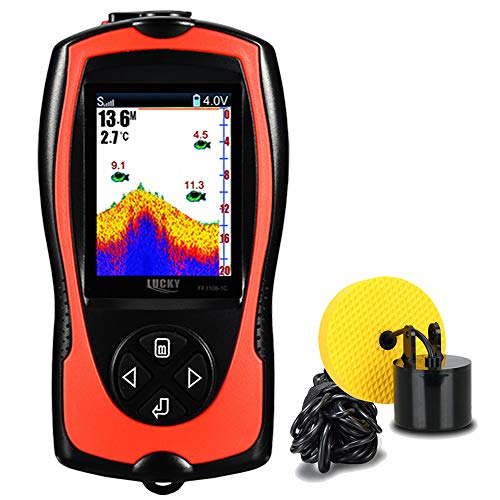 Best for saltwater shore fishingLUCKY Portable Fish Finder Handheld Kayak Fish Finders Wired Fish Depth FinderView on Amazon
- 6
 Best for ice fishingPortable Wired Fish Finder Ice Kayak Fishing Gear Depth Finder with LCD DisplayView on Amazon
- 7
 Best for large-display viewingPortable Fish Finder Large HD Display Wireless Depth Finders for BoatsView on Amazon
Our Top Picks
Quick Comparison
| Product | Best for | Key feature |
|---|---|---|
| Garmin Striker 4 with Transducer, 3.5″ GPS Fishfinder with Chirp | Boat anglers wanting GPS and a built-in display | CHIRP sonar with GPS |
| LUCKY Kayak Portable Fish Depth Finder Water Handheld Fish Finder Sonar Castable | Kayak anglers | Castable transducer, handheld LCD |
| Humminbird PiranhaMAX 4 Fish Finder with Transducer, Dual Beam Sonar | Anglers wanting wide and narrow coverage | Dual-beam sonar |
| Venterior Portable Rechargeable Fish Finder Wireless Sonar Sensor | Shore and dock fishing | Wireless sensor with fish size and temperature |
| LUCKY Portable Fish Finder Handheld Kayak Fish Finders Wired Fish Depth Finder | Saltwater and sea fishing from small craft | Wired sensor on a handheld display |
| Portable Wired Fish Finder Ice Kayak Fishing Gear Depth Finder with LCD Display | Ice and light-duty kayak use | Wired LCD depth finder |
| Portable Fish Finder Large HD Display Wireless Depth Finders for Boats | Anglers who want an easy-to-read screen | Large HD display, 147 ft depth rating |
Garmin Striker 4 with Transducer, 3.5″ GPS Fishfinder with Chirp
Garmin 010-01550-00 Striker 4 with Transducer, 3.5" GPS Fishfinder with Chirp
Best for: Boat anglers who want GPS waypoints and a built-in display
This is a fixed-mount unit aimed at anglers who fish from a boat and want to mark spots, track their route and read bottom structure on one screen. It suits people who prefer a dedicated display over a handheld.
Key specs
- 3.5-inch display
- GPS fishfinder with CHIRP sonar
- Transducer included
Pros
- Integrated GPS for saving waypoints
- CHIRP sonar gives sharper target separation than basic single-frequency units
- Transducer included, so setup is straightforward
Cons
- Requires a boat mount and power connection, so it is less portable
- Smaller screen than some larger-display alternatives
Bottom line: A strong fit for boat anglers who want GPS and a permanent display rather than a handheld unit.
View on AmazonLUCKY Kayak Portable Fish Depth Finder Water Handheld Fish Finder Sonar Castable
LUCKY Kayak Portable Fish Depth Finder Water Handheld Fish Finder Sonar Castable Kayak Boat Fishfinder Transducer Fishing LCD Display FFC1108
Best for: Kayak anglers
Built for small craft, this castable handheld unit lets you drop the transducer over the side and read depth on a compact display. It fits anglers who need something light and quick to set up.
Key specs
- Handheld LCD display
- Castable sonar transducer
Pros
- Lightweight and easy to store on a kayak
- Castable design works without a permanent mount
- Simple controls for quick depth checks
Cons
- Limited detail compared with GPS units
- Display is small for reading fine structure in bright sun
Bottom line: A practical choice for kayak anglers who mainly need depth and rough structure.
View on AmazonHumminbird PiranhaMAX 4 Fish Finder with Transducer, Dual Beam Sonar
Humminbird PiranhaMAX 4 Fish Finder with Transducer, Dual Beam Sonar
Best for: Anglers wanting wide and narrow sonar coverage
Dual-beam sonar lets you see a wide cone of water and a narrower beam at the same time. This suits anglers who want a broad view of the bottom while still reading fish arches directly below the boat.
Key specs
- Dual-beam sonar
- Transducer included
Pros
- Dual-beam view covers more water per pass
- Well-known brand with broad accessory support
- Transducer included for simple installation
Cons
- Not a GPS unit, so waypoint marking is limited
- Mounting requires a boat or fixed installation
Bottom line: A solid pick for anglers who value a wider sonar view and a dependable brand.
View on AmazonVenterior Portable Rechargeable Fish Finder Wireless Sonar Sensor
Venterior Portable Rechargeable Fish Finder Wireless Sonar Sensor Fishfinder Depth Locator with Fish Size, Temperature, Bottom Contour, Color Display
Best for: Shore and dock fishing
A wireless sensor you cast from shore or a dock, paired with a handheld display. It suits anglers who fish from banks and piers and want to check depth, bottom contour and fish marks without wading.
Key specs
- Wireless sonar sensor
- Rechargeable handheld display
- Displays fish size, temperature and bottom contour
Pros
- No cable runs back to the display
- Rechargeable, reducing battery waste
- Shows temperature and bottom contour alongside depth
Cons
- Wireless range is limited and can drop in heavy chop
- Battery life depends on use and should be checked against your trip length
Bottom line: Best suited to shore and dock anglers who want a cordless, casting-friendly setup.
View on AmazonLUCKY Portable Fish Finder Handheld Kayak Fish Finders Wired Fish Depth Finder
LUCKY Portable Fish Finder Handheld Kayak Fish Finders Wired Fish Depth Finder Sonar Sensor Transducer for Boat Fishing Sea Fishing
Best for: Saltwater and sea fishing from small craft
A wired transducer on a handheld display, aimed at anglers fishing salt water from kayaks or small boats. The wired connection avoids wireless drop-outs in marine conditions.
Key specs
- Wired transducer and handheld display
Pros
- Wired link avoids wireless interference
- Portable and easy to move between craft
- Designed for boat and sea fishing use
Cons
- Cable length limits placement options
- Fewer features than GPS-equipped units
Bottom line: A reasonable choice for anglers who want a simple wired unit for salt water from a small boat or kayak.
View on AmazonPortable Wired Fish Finder Ice Kayak Fishing Gear Depth Finder with LCD Display
Portable Wired Fish Finder Ice Kayak Fishing Gear Depth Finder with LCD Display Sonar Transducer
Best for: Ice and light-duty kayak use
This wired depth finder with an LCD display targets anglers who need a basic depth reading for ice fishing or light kayak work. Its simplicity is the main appeal.
Key specs
- Wired sonar transducer
- LCD display
Pros
- Simple, low-maintenance operation
- Portable and easy to carry across the ice
- Clear depth readout for basic use
Cons
- Limited detail for fish identification
- Wired cable can be awkward to manage on small craft
Bottom line: A budget-friendly option for anglers who mainly need depth readings on ice or from a kayak.
View on AmazonPortable Fish Finder Large HD Display Wireless Depth Finders for Boats
Portable Fish Finder Large HD Display Wireless Depth Finders for Boats with 147 feet Depth Detection Sensor, Rechargeable Castable Fish Finder Display Fish, Temp
Best for: Anglers who want an easy-to-read screen
A wireless depth finder with a large HD display and a rated depth detection of 147 feet. It suits anglers who struggle with small screens and want quick readability from the boat seat.
Key specs
- Large HD display
- Wireless sensor
- 147-foot depth detection rating (per listing)
- Rechargeable
Pros
- Large screen is easier to read in sunlight and at a glance
- Wireless sensor avoids long cable runs
- Rechargeable power source
Cons
- Wireless link can be affected by hull material and distance
- Brand support is less established than major marine electronics names
Bottom line: A good fit for anglers who prioritize screen size and readability in a portable package.
View on AmazonBuying Guide
Sonar Type: Single-Beam, Dual-Beam and CHIRP
Single-beam sonar sends one cone of sound, which is simple and widely used. Dual-beam units add a wider view alongside a narrow beam, helping you see more water and fish arches directly below. CHIRP sonar sends a range of frequencies, which many owners report gives cleaner target separation. Match the sonar type to how you fish: wide coverage for locating schools, narrow detail for reading structure.
Good picks for this: Humminbird PiranhaMAX 4 Fish Finder with Transducer, Garmin Striker 4 with Transducer
Depth Rating and Range
Check the stated depth rating against the water you fish most. A unit rated for shallow water may lose the bottom in deeper channels, while a deeper-rated unit may be more than you need for a pond or creek. Listed depth ratings are maximums under ideal conditions, so allow some margin.
Good picks for this: Portable Fish Finder Large HD Display Wireless Depth Finders for Boats, LUCKY Kayak Portable Fish Depth Finder
Display Size and Readability
A larger screen is easier to read in bright sun and at a glance, but it adds size and weight. Smaller handheld displays are lighter but harder to read while moving. Consider how far the display sits from your eyes on your craft or your shore setup.
Good picks for this: Portable Fish Finder Large HD Display Wireless Depth Finders for Boats, Garmin Striker 4 with Transducer
Portability Versus Fixed Mounting
Handheld and castable units suit kayaks, shore fishing and ice. Fixed units with GPS suit boats that stay on the same mount. Decide whether you will move the unit between craft or leave it in place, because that choice drives everything else.
Good picks for this: Venterior Portable Rechargeable Fish Finder Wireless Sonar Sensor, Portable Wired Fish Finder Ice Kayak Fishing Gear Depth Finder
Wired Versus Wireless Connection
Wired transducers avoid signal drop-outs and are often preferred for saltwater and rough conditions. Wireless sensors remove cable clutter and make casting easier, but range and interference can limit performance. Owners often report that wireless links are most reliable within a short, clear line of sight.
Good picks for this: LUCKY Portable Fish Finder Handheld Kayak Fish Finders Wired Fish Depth Finder, Venterior Portable Rechargeable Fish Finder Wireless Sonar Sensor
Power and Battery Life
Portable units rely on rechargeable batteries or built-in power. Check how the unit is powered and plan around your longest trip. Carry a spare charge or power bank if you fish all day, and recharge fully before each outing.
Good picks for this: Venterior Portable Rechargeable Fish Finder Wireless Sonar Sensor, Portable Fish Finder Large HD Display Wireless Depth Finders for Boats
Durability and Water Exposure
Units used on kayaks, in salt water or on ice take hard knocks and frequent exposure. Look at the stated water resistance and the quality of the connectors and cable. Rinse with fresh water after saltwater use and store the display dry to extend service life.
Good picks for this: LUCKY Portable Fish Finder Handheld Kayak Fish Finders Wired Fish Depth Finder, Humminbird PiranhaMAX 4 Fish Finder with Transducer
FAQ
What is the difference between a handheld fish finder and a boat-mounted one?
Handheld units are light, portable and suited to kayaks, shore and ice. Boat-mounted units are fixed, usually larger, and often include GPS and more detailed displays. Choose based on where and how you fish.
Does a dual-beam fish finder help me find more fish?
Dual-beam sonar shows a wider area and a narrower detail beam together. Many anglers find this helps locate structure and schools faster, but results depend on water conditions and how well the unit is set up.
Can a wireless fish finder work in salt water?
Wireless fish finders can work in salt water, but range and signal reliability can be affected by distance and interference. A wired transducer is often preferred for consistent saltwater use. Check the manufacturer’s stated limits before buying.
How deep can a portable fish finder read?
Depth ratings vary by model and are usually maximums under ideal conditions. Check the stated rating and allow a margin, especially in deep or rough water. Manufacturers specify these figures in their product documentation.
Do I need GPS on a fish finder?
GPS lets you mark spots, track your route and return to productive areas. It is most useful from a boat. Kayak and shore anglers often do well without it, because they fish smaller areas and rely more on depth and structure readings.
How should I care for a fish finder after saltwater use?
Rinse the transducer and display with fresh water, dry them thoroughly, and store them away from direct sun and heat. Follow the manufacturer’s care instructions. Avoid high-pressure washing on electronics and seals.
Is a fish finder a safety tool?
A fish finder is not a substitute for navigation or safety equipment. If you are fishing offshore or in unfamiliar water, consult a marine safety professional or your local Coast Guard auxiliary for guidance on proper gear and boating safety.
Conclusion
For boat anglers who want GPS and a permanent display, the Garmin Striker 4 is a sensible starting point. Kayak anglers will likely find the LUCKY Kayak Portable Fish Depth Finder easier to live with, while shore and dock fishers may prefer the Venterior wireless sensor. Anglers who want wide sonar coverage should look at the Humminbird PiranhaMAX 4, and those who prioritize screen size should consider the large HD wireless model. Match the unit to your craft, water and how often you move it, and check the specs against your own fishing before you buy.
Sources
- Boating safety guidance and equipment requirements for small craft (uscg.mil)
- Charts, tides and water depth information for coastal and marine anglers (noaa.gov)
- Fishing regulations and resource information for freshwater and saltwater habitats (fws.gov)
Related reading
- Humminbird ICE 35 Fish Finder: Setup, Use and Ice Fishing Tips
- Fish Finder Fishing Charters: How to Pick the Right Trip (2026)
- Yakattack Fish Finder Mount: 5 Best Picks Compared (2026)
- Trolling Motor Fish Finder Options: 7 Best Picks for 2026
About Caleb Morgan
Caleb Morgan is part of our editorial team and reviews and edits our saltwater fishing guides, checking product details against manufacturer specifications and owner feedback.
About the author
Caleb Morgan writes reviews and buying guides for Saltwater Fishing.