Lowrance Eagle Fish Finder Review: Features and Performance
Lowrance Eagle fish finder review covering the Eagle Eye 9 Live features, specs, pros and cons, and who should buy it versus skip it for saltwater and freshwate
 By Caleb Morgan
Updated November 10, 2026
 By Caleb Morgan
Updated November 2026
The lowrance eagle fish finder line is aimed at anglers who want capable sonar without a complicated setup, and the Eagle Eye 9 Live sits at the larger end of that lineup. It suits boat owners who fish mixed water, want a bright 9-inch screen they can read in sunlight, and like the idea of seeing fish and structure both below the hull and ahead of it. It is a weaker fit for kayak anglers who need the smallest possible footprint, for anglers who only fish from shore or a pier, and for buyers who want a full saltwater chartplotter with offshore cartography. Those buyers will be better served by a different class of unit.
Lowrance Eagle Eye 9 Live Sonar Fish Finder with C-MAP Inland Charts | 9-inch IPS screen; Live Forward and Down views; CHIRP and DownScan with FishReveal in one included transducer
Product Overview
The Lowrance Eagle Eye 9 Live Sonar Fish Finder with C-MAP Inland Charts is a dedicated sonar unit built around a 9-inch IPS display. Its listing highlights Live Forward and Live Down views, CHIRP and DownScan imaging with FishReveal, and a single included transducer that covers those sonar modes. The package also includes inland chart coverage through C-MAP, which points it toward lakes, rivers, reservoirs and bays rather than deep offshore navigation.
The Eagle line has long been positioned as the entry point into Lowrance’s sonar ecosystem. The Eye 9 Live is the version that adds the live imaging features most anglers now associate with forward-looking sonar, packaged in a screen size that is comfortable to read from a casting deck or console. Manufacturers generally position this kind of unit for anglers who want to scan water ahead of the boat, watch lures in real time, and identify bottom structure without moving to a more expensive multifunction display.
Key Features & Specifications
The table below lists only the specifications that are stated in the product name or are well documented for this model. Confirm any detail you plan to depend on against the current manufacturer spec sheet before purchase.
| Feature | What It Means for You |
|---|---|
| 9-inch IPS display | Larger viewing area than compact units, with wide viewing angles for shared use at the helm |
| Live Forward view | Shows targets and structure ahead of and around the boat as it moves |
| Live Down view | Real-time downward imaging for watching lures and fish directly below |
| CHIRP sonar | Sweeps a range of frequencies for sharper target separation than single-frequency sonar |
| DownScan with FishReveal | High-resolution side-and-down imaging that helps identify fish, cover and bottom composition |
| Single included transducer | One transducer handles the listed sonar modes, simplifying installation |
| C-MAP Inland Charts | Pre-loaded inland cartography for lakes, rivers and reservoirs |
Pros & Cons
Pros
- Large 9-inch screen that is easier to read at a glance than compact 4- or 5-inch units
- Live Forward and Live Down views give real-time sonar that many owners find useful for lure work
- CHIRP and DownScan with FishReveal together offer detailed imaging of fish and bottom
- One included transducer simplifies the install and reduces the number of cables to route
- Inland chart coverage adds navigational value on lakes and rivers without extra purchases
Cons
- The 9-inch footprint and mounting requirements make it a poor match for kayaks and small skiffs with limited console space
- Inland charts do not replace offshore saltwater cartography for anglers running long distances
- Live sonar modes depend on a clear, correctly mounted transducer, and installation quality strongly affects results
- Power draw and the need for a proper power source should be planned for before buying
- Anglers who only want basic depth and fish arches may find a simpler, lower-complexity unit easier to live with
Performance Analysis
Performance on any sonar unit depends on three things: the transducer, the mounting position, and the water being fished. Owners who discuss the Eagle line commonly report that the larger screen makes target identification easier, particularly when sorting baitfish from game fish on busy screens. The combination of CHIRP and DownScan is generally described as producing cleaner returns than basic single-beam sonar, with clearer separation between fish, cover and bottom.
Live views are where this model is most often discussed. Forward-looking sonar lets you scan a stretch of water before you reach it, which is useful for finding structure, schools and suspended fish. Owners frequently note that Live Down helps them watch a jig or bait fall through the water column. These features tend to shine in clear to moderately stained water; in heavily turbid water or with a poorly positioned transducer, returns can be noisier and less informative. Mounting the transducer flat and free of turbulence, and keeping it submerged at planing speed, is the single most common factor owners cite for good results.
Inland charts add practical value on familiar lakes and rivers, letting you reference depth contours and navigational hazards on the same screen. They are not a substitute for dedicated offshore charting, and anglers who run open-water routes should weigh that limitation carefully. Overall, the pattern in owner feedback points to a capable, readable unit whose real-world results track closely with installation quality and the type of water you fish.
Who Should Buy This Product?
This unit fits anglers who run a boat with a usable console or mounting surface, fish inland or nearshore waters, and want forward and downward live sonar on a screen they can read without squinting. Bass anglers working structure, walleye and crappie fishermen who scan ahead for cover, and anyone who wants a larger display for a shared helm will likely find it a good match.
You should skip it if your boat has very limited space, if you fish primarily from a kayak or float tube where portability matters most, or if your main need is offshore saltwater navigation with extensive charts. Shore anglers and pier fishermen will also get more value from a portable depth finder. Budget-focused anglers who only need basic depth and fish arches may prefer a smaller, simpler unit.
Buying Guide
Before committing to any unit in the lowrance eagle fish finder family, work through a few practical questions. First, decide where it will mount. A 9-inch screen needs a sturdy bracket with clear sightlines, and you should confirm the mount location will not block the helm or interfere with other electronics. Second, plan the transducer. Transom mounts are the most common, but trolling motor and through-hull options exist, and the transducer position determines the quality of your returns more than almost any other setting. Third, think about power. Confirm your battery and wiring can handle the draw and that the cable run is practical.
Third, consider chart needs. Inland charts cover most lake and river fishing, but if you regularly run open water, you may want a unit with broader cartography or a separate chartplotter. Finally, weigh screen size against space. Smaller Eagle models are easier to fit on tight consoles and may be a better choice for smaller boats, while the 9-inch model rewards anglers who have the room.
If you want to compare alternatives within the same family, two well-known options are worth a look:
- Lowrance Eagle 7 SplitShot HD Fish Finder with C-MAP Inland Charts: a 7-inch IPS display with CHIRP and DownScan, autotuning sonar and Genesis Live mapping, a good middle ground for anglers who want most of the imaging features on a smaller screen.

Lowrance Eagle 7 SplitShot HD Fish Finder with C-MAP Inland Charts | 7-inch IPS Display; CHIRP and DownScan with FishReveal; autotuning sonar; Genesis Live mapping; easy twist-lock connector
- Lowrance Eagle 4X Fish Finder with Bullet Transducer: a 4-inch unit with wide-angle sonar coverage and autotuning, suited to smaller boats and anglers with limited mounting space.
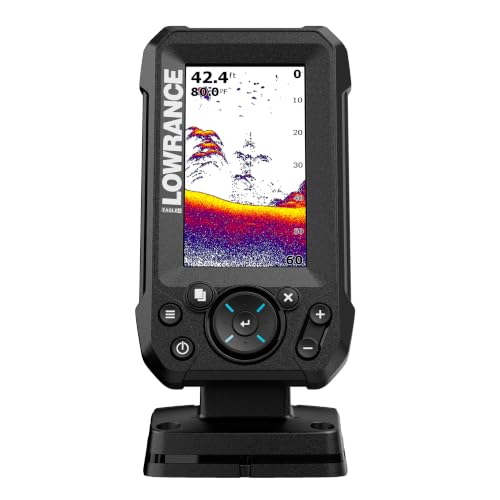
Lowrance Eagle 4X Fish Finder with Bullet Transducer | 4-inch IPS Display; wide-angle sonar coverage; autotuning sonar; easy twist-lock connector
For more context on fitting a unit to your boat, see Trolling Motor Fish Finder Combo: How to Choose and Mount One (2026) and Top 7 Transducers for Fish Finder Models Compared for Every Angler (2026). If you are comparing screen sizes across brands, Lowrance HDS 12 Fish Finder: 6 Best Models Compared for 2026 covers larger multifunction options, and Top 5 Best Fish Finders for Money Picks Compared in 2026 offers a broader value-focused comparison.
FAQ
Is the Lowrance Eagle Eye 9 Live good for saltwater fishing?
It can be used nearshore and in brackish or saltwater bays, and its sonar features work in those environments. However, its included inland charts are designed for lakes and rivers. Anglers who run offshore should plan for dedicated saltwater cartography.
What is the difference between Live Forward and Live Down?
Live Forward shows sonar returns ahead of and around the boat as it moves, helping you scan structure and fish before you reach them. Live Down provides real-time imaging directly below the transducer, which is useful for watching a lure or bait fall.
Does the unit need a specific transducer?
The listing describes a single included transducer that handles the stated sonar modes. Replacement or upgraded transducers may be available, but you should confirm compatibility with the manufacturer before buying one.
How hard is it to install?
Installation involves mounting the display, routing the transducer and connecting power. Owners with basic boat wiring experience usually manage it, but a marine electronics technician can help if you are unsure about wiring or transducer placement.
Will it work on a kayak?
The 9-inch display and typical mounting requirements make it better suited to powered boats. Kayak anglers generally get better results from a smaller, more portable unit.
Can I read the screen in bright sunlight?
The IPS display is designed for good visibility, and owners commonly report it is readable in daylight. Glare can still be an issue depending on mounting angle, so a bracket that allows adjustment helps.
Is it worth it compared to a smaller Eagle model?
If you have the console space and want a larger, easier-to-read screen with live imaging, the 9-inch model is a logical step up. If space is tight or your fishing is mostly small-water, a smaller model may serve you better.
Final Verdict
The Lowrance Eagle Eye 9 Live is a strong choice for anglers with room on their boat who want large, readable live forward and downward sonar with CHIRP and DownScan imaging and inland chart coverage in one package. It is less suited to kayak fishing, shore angling or offshore navigation. Before you buy, confirm your mounting space, power setup and chart needs, and verify current specifications with the manufacturer. Ready to check it out? View on Amazon
Related reading
- Yakattack Fish Finder Mount: 5 Best Picks Compared (2026)
- Top 7 Chart Plotter Fish Finder Models with GPS and Charts (2026)
About Caleb Morgan
Caleb Morgan is part of our editorial team and reviews and edits our saltwater fishing guides, checking product details against manufacturer specifications and owner feedback.
About the author
Caleb Morgan writes reviews and buying guides for Saltwater Fishing.