7 Best Fish Finders with Flasher Models for Saltwater Anglers (2026)
Compare 7 fish finder with flasher options for saltwater anglers. Learn which sonar, screen size and mounting suit your boat, kayak or shore fishing.
 By Caleb Morgan
Updated November 10, 2026
 By Caleb Morgan
Updated November 2026
A fish finder with flasher is the tool many anglers reach for when they want to see fish, bait and bottom structure in real time, not just a line on a screen. Choosing one comes down to a few practical questions: what kind of water you fish, whether you mount it on a boat, kayak or shore rig, how much screen detail you need, and whether you want GPS and mapping built in. The picks below were compared on published specifications, brand reputation and the patterns owners commonly report, with an eye toward saltwater use.
Our top picks at a glance
- 1TOP CHOICEBest overallGarmin 010-01550-10 Striker 4 Fish-Finder with Portable kit, 3.5"View on Amazon
- 2
 TOP CHOICEBest for shore and kayak setupsVenterior Portable Rechargeable Fish Finder Wireless Sonar Sensor Fishfinder Depth LocatorView on Amazon
- 3
 TOP CHOICEBest for advanced mappingHumminbird ICE HELIX 5 G3 GPS Fish Finder, Dual Spectrum CHIRP SonarView on Amazon
- 4
 Best for Bluetooth phone pairingFishPod 5x Bluetooth Fish Finder With AI TechnologyView on Amazon
- 5
 Best for large, sharp displaysLowrance Eagle 7 SplitShot HD Fish Finder with C-MAP Inland ChartsView on Amazon
- 6
 Best budget pickGarmin 010-01550-00 Striker 4 with Transducer, 3.5" GPS Fishfinder with ChirpView on Amazon
- 7
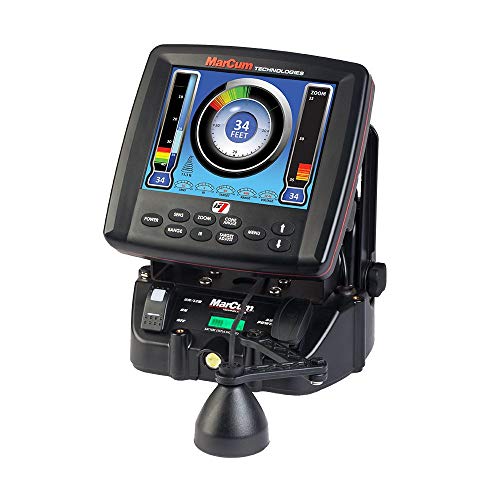 Best for hard-core ice and open-water overlapMarCum LX-7Li Lithium Combo Sonar SystemView on Amazon
Our Top Picks
Quick Comparison
| Product | Best for | Key feature |
|---|---|---|
| Garmin Striker 4 Portable Kit | Boats and kayaks needing a simple setup | Portable kit with CHIRP sonar |
| Garmin Striker 4 with Transducer | Anglers wanting a lower-cost entry point | GPS fishfinder with CHIRP |
| Humminbird ICE HELIX 5 G3 GPS | Anglers who want mapping and GPS | Dual Spectrum CHIRP sonar |
| Venterior Portable Fish Finder | Shore, pier and kayak use | Wireless sensor with fish size readout |
| FishPod 5x Bluetooth Fish Finder | Anglers who prefer a phone display | Bluetooth connection with AI fish detection |
| Lowrance Eagle 7 SplitShot HD | Users wanting a large, detailed screen | 7-inch IPS display with DownScan and FishReveal |
| MarCum LX-7Li Lithium Combo | Serious anglers wanting a lithium-powered system | Lithium battery with high-definition sonar |
Garmin 010-01550-10 Striker 4 Fish-Finder with Portable kit, 3.5″
Garmin 010-01550-10 Striker 4 Fish-Finder with Portable kit, 3.5"
Best for: Boat and kayak anglers who want a simple, portable setup
This model suits anglers who move their fish finder between vessels or want a unit that is quick to install and remove. It is a practical choice for inshore saltwater fishing where a compact screen is enough to read bottom contour and fish arches.
Key specs
- 3.5-inch display
- CHIRP sonar
- Portable kit configuration
Pros
- Easy to move between boats and kayaks
- Clear, straightforward menus
- Compact footprint suits small craft
Cons
- Smaller screen limits detail on busy water
- Fewer advanced mapping features than larger models
Bottom line: A strong pick for anglers who want portability and a simple interface for inshore use.
View on AmazonGarmin 010-01550-00 Striker 4 with Transducer, 3.5″ GPS Fishfinder with Chirp
Garmin 010-01550-00 Striker 4 with Transducer, 3.5" GPS Fishfinder with Chirp
Best for: Budget-minded anglers who want GPS and CHIRP in one unit
This version is aimed at anglers who want GPS-enabled sonar without stepping up to a larger display. It fits small boats and kayaks where mounting space and power draw matter.
Key specs
- 3.5-inch display
- GPS fishfinder with CHIRP sonar
- Includes transducer
Pros
- GPS support for marking spots
- Includes transducer in the box
- Lightweight, easy to mount
Cons
- Small screen can feel cramped
- Limited mapping compared with premium units
Bottom line: A sensible choice for anglers who want GPS and CHIRP without a large investment in display size.
View on AmazonHumminbird ICE HELIX 5 G3 GPS Fish Finder, Dual Spectrum CHIRP Sonar
Humminbird 411730-1 ICE H5 Chirp GPS G3 Fish Finder
Best for: Anglers who want GPS mapping and dual-beam sonar detail
The HELIX line is built for anglers who spend time reading structure and want mapping tools to repeat productive spots. It works well on boats where you plan to fish offshore edges, reefs and drop-offs.
Key specs
- Dual Spectrum CHIRP sonar
- GPS mapping capability
Pros
- Strong sonar detail for structure
- GPS supports waypoint and track features
- Well-regarded brand for fishfinders
Cons
- Setup takes more time than basic units
- Higher complexity may overwhelm casual users
Bottom line: Best for anglers who value mapping and sonar detail and are willing to learn the menus.
View on AmazonVenterior Portable Rechargeable Fish Finder Wireless Sonar Sensor Fishfinder Depth Locator
Portable Rechargeable Fish Finder Wireless Sonar Sensor Fishfinder Depth Locator with Fish Size, Bottom Contour, Color LCD Display
Best for: Shore, pier and kayak anglers who want a wireless, portable unit
This wireless sensor design is aimed at anglers who cast or drift and need a handheld display rather than a fixed mount. It suits short sessions from banks, piers or small craft.
Key specs
- Rechargeable, portable design
- Wireless sonar sensor
- Color display with fish size and temperature readings
Pros
- Wireless sensor simplifies casting use
- Portable and light
- Shows bottom contour and fish size
Cons
- Limited range compared with fixed transducers
- Readings may be less precise in rough saltwater
Bottom line: A useful add-on for shore and kayak anglers, though not a replacement for a boat-mounted unit.
View on AmazonFishPod 5x Bluetooth Fish Finder With AI Technology
FishPod 5x Bluetooth Fish Finder With AI Technology
Best for: Anglers who prefer viewing sonar on a phone or tablet
This type of unit pairs with a mobile device, which appeals to anglers who already carry a phone and want to avoid a separate display. It works for casual shore and kayak sessions.
Key specs
- Bluetooth connection to mobile device
- AI-assisted fish detection
Pros
- Uses your existing phone as a display
- Compact and easy to carry
- Simple pairing process
Cons
- Phone battery drain during long sessions
- Smaller effective display than dedicated units
Bottom line: A convenient pick for light use, especially from shore or a kayak.
View on AmazonLowrance Eagle 7 SplitShot HD Fish Finder with C-MAP Inland Charts
Lowrance Eagle 7 SplitShot HD Fish Finder with C-MAP Inland Charts | 7-inch IPS Display; CHIRP and DownScan with FishReveal; autotuning sonar; Genesis Live mapping; easy twist-lock connector
Best for: Anglers who want a large, detailed screen with DownScan imaging
The 7-inch display and DownScan imaging make this a good fit for boat anglers who want to see bottom detail and fish suspended near structure. It suits mid-size boats where the display can be mounted at eye level.
Key specs
- 7-inch IPS display
- CHIRP and DownScan with FishReveal
- Autotuning sonar
- Genesis Live mapping
Pros
- Large, readable screen
- Autotuning simplifies setup
- Twist-lock connector speeds installation
Cons
- Larger footprint than compact units
- Chart coverage listed is inland-focused, so verify saltwater coverage
Bottom line: Well suited to anglers who want a big display and DownScan detail on a boat.
View on AmazonMarCum LX-7Li Lithium Combo Sonar System
MarCum LX-7Li Lithium Combo Sonar System | High-Definition Ice Fishing Fish Finder | Advanced Sonar with Lithium Battery | Premium Fishing Gear
Best for: Anglers who want a lithium-powered, high-definition sonar system
This system is built around a lithium battery and high-definition sonar, and it is marketed heavily toward ice fishing. Anglers who fish both open water and cold-weather spots may find it useful, but check that its features match your target water.
Key specs
- Lithium battery
- High-definition sonar
Pros
- Lithium battery supports longer runtimes
- High-definition sonar display
- Dedicated combo kit
Cons
- Design leans toward ice fishing, so saltwater features may be limited
- Heavier than basic portable units
Bottom line: A good match for anglers who want lithium power and sonar detail, especially if they split time with cold-weather fishing.
View on AmazonBuying Guide
Sonar Type and Flasher Display
A flasher-style display shows fish arches and bottom returns as a color-coded graph. CHIRP sonar sends a range of frequencies, which generally gives sharper target separation than older single-frequency designs. When comparing units, look for CHIRP support and check whether the display can split between bottom and fish views.
Good picks for this: Garmin Striker 4 Portable Kit, Humminbird ICE HELIX 5 G3 GPS
Screen Size and Resolution
Screen size affects how much detail you can read at a glance. Units in the 3.5-inch range are compact and suit small boats and kayaks, while 7-inch displays give more room for bottom detail and split-screen views. Resolution matters as much as diagonal size, so check the pixel count in the listing before buying.
Good picks for this: Lowrance Eagle 7 SplitShot HD, Garmin Striker 4 with Transducer
Mounting Style and Portability
Fixed-mount units need a bracket, power run and transducer installation. Portable kits and wireless sensors trade permanence for flexibility. If you fish from multiple craft, favor a unit that moves easily. If you fish from one boat, a fixed installation usually offers cleaner wiring and better transducer placement.
Good picks for this: Garmin Striker 4 Portable Kit, Venterior Portable Rechargeable Fish Finder
GPS and Mapping Features
GPS lets you mark waypoints, log tracks and return to productive spots. Mapping depth varies widely. Basic GPS handles marking, while advanced units support detailed contour and chart overlays. Before buying, confirm the chart coverage covers your saltwater fishing area, since some listed charts are inland-focused.
Good picks for this: Humminbird ICE HELIX 5 G3 GPS, Lowrance Eagle 7 SplitShot HD
Power Source and Battery Life
Battery type shapes how long you can run a unit between charges. Lithium batteries typically offer longer runtimes and lighter weight than lead-acid options, though manufacturers specify different runtimes depending on screen brightness and sonar settings. For kayaks and shore use, a rechargeable pack with a known runtime is more practical than a unit that drains a boat battery.
Good picks for this: MarCum LX-7Li Lithium Combo Sonar System, Venterior Portable Rechargeable Fish Finder
Connectivity and Phone Display
Bluetooth and app-based units let you view sonar on a phone or tablet. This is convenient for light use, but phone batteries drain quickly when the display runs continuously. Dedicated screens handle sunlight and continuous sonar more reliably, especially on open water.
Good picks for this: FishPod 5x Bluetooth Fish Finder, Venterior Portable Rechargeable Fish Finder
Durability and Marine Conditions
Saltwater environments are hard on electronics. Look for units rated for marine use, with corrosion-resistant connectors and sealed housings. Check the manufacturer’s stated water-resistance rating and follow its mounting and cleaning instructions. Rinse connectors after saltwater trips and keep covers on when the unit is stored.
Good picks for this: Garmin Striker 4 with Transducer, Lowrance Eagle 7 SplitShot HD
FAQ
What is a fish finder with flasher?
It is a sonar display that shows bottom structure and fish as a graph, often in color. Many anglers use the term to describe a classic flasher-style screen, which is still common on modern units.
Is CHIRP sonar worth it for saltwater fishing?
CHIRP sonar generally separates targets more clearly than single-frequency sonar, which helps when fish sit close to bottom structure. Manufacturers describe CHIRP as improving detail, though results vary with water conditions and transducer placement.
Can I use a fish finder from a kayak or shore?
Yes. Portable and wireless units are designed for these setups. Battery life and range are the main limits, so check the manufacturer’s runtime figures and plan charging before each trip.
Do I need GPS on my fish finder?
GPS is useful for marking productive spots and returning to them. If you fish the same reefs or drop-offs often, GPS saves time. For occasional shore use, basic sonar may be enough.
Which screen size should I choose?
Smaller displays around 3.5 inches suit kayaks and small boats. Larger 7-inch displays are easier to read on mid-size boats and show more detail at once. Choose based on where you will mount the unit and how far it sits from your eyes.
How do I keep a saltwater fish finder working longer?
Rinse the unit and connectors with fresh water after each trip, dry thoroughly, and store it out of direct sun. Follow the manufacturer’s care instructions, and consult a marine electronics technician if you notice fault codes or water intrusion.
Conclusion
For most boat anglers, the Garmin Striker 4 Portable Kit offers a simple, practical starting point, while the Humminbird ICE HELIX 5 G3 GPS suits anglers who want mapping. Shore and kayak anglers should look at the Venterior portable unit or the FishPod Bluetooth option. Anglers who want a large screen should consider the Lowrance Eagle 7 SplitShot HD, and those who prioritize a lithium battery may prefer the MarCum LX-7Li. Match the sonar type, screen size and mounting style to how and where you fish, and verify chart coverage before you commit to a saltwater trip.
Sources
- Charts, tide data and guidance on navigating and fishing safely in US coastal waters (noaa.gov)
- Boating safety requirements, equipment guidance and on-water safety practices (uscg.mil)
- Fishing regulations, habitat information and responsible angling resources (fws.gov)
Related reading
- Yakattack Fish Finder Mount: 5 Best Picks Compared (2026)
- Trolling Motor Fish Finder Combo: How to Choose and Mount One (2026)
- Top 7 Chart Plotter Fish Finder Models with GPS and Charts (2026)
- Top 7 Best Inexpensive Fish Finders for Budget Anglers (2026)
About Caleb Morgan
Caleb Morgan is part of our editorial team and reviews and edits our saltwater fishing guides, checking product details against manufacturer specifications and owner feedback.
About the author
Caleb Morgan writes reviews and buying guides for Saltwater Fishing.