6 Best Fish Finders for Catfish Options for Every Angler (2026)
Looking for a fish finder for catfish? Compare six sonar options by display, transducer type, portability and owner feedback to pick the right one for your wate
 By Caleb Morgan
Updated November 9, 2026
 By Caleb Morgan
Updated November 2026
Catfish live in some of the most varied water in the country, from muddy river bends and reservoir channels to brackish estuaries and deep holes in big lakes. Finding a fish finder for catfish means more than buying a screen with a sonar cable attached. Catfish often sit on the bottom, suspend near structure, or hold tight to current breaks, so the unit you choose needs to show depth, bottom composition and fish arches clearly enough that you can work a productive spot without guessing. This guide compares six options across portability, display size, transducer style and ease of use, based on specifications and common owner feedback patterns. We did not test these units ourselves; the notes below reflect what manufacturers specify and what owners tend to report.
Our top picks at a glance
- 1TOP CHOICEBest overallLowrance Eagle 4X Fish Finder with Bullet TransducerView on Amazon
- 2
 TOP CHOICEBest for boat-mounted catfish tripsGarmin 010-01550-00 Striker 4 with Transducer, 3.5" GPS Fishfinder with ChirpView on Amazon
- 3
 TOP CHOICEBest for kayak anglersHandheld Fish Finder Portable Kayak Fishfinder Sonar Depth LCD DisplayView on Amazon
- 4
 Best wireless optionVenterior Portable Rechargeable Fish Finder Wireless Sonar Sensor FishView on Amazon
- 5
 Best color displayGarmin Striker Vivid 4cv Fishfinder with TransducerView on Amazon
- 6
 Best budget pickLUCKY Kayak Portable Fish Depth Finder Water Handheld Fish Finder Sonar Castable FFC1108View on Amazon
Selection criteria used here: how the unit mounts or travels, display readability in bright sun, transducer type (handheld castable versus bullet or through-hull), depth coverage and bottom-reading features, and how much setup a beginner needs. We also looked at brand reputation and consistent owner comments about reliability.
Our Top Picks
Quick Comparison
| Product | Best for | Key feature |
|---|---|---|
| Lowrance Eagle 4X Fish Finder with Bullet Transducer | Overall boat use | 4-inch IPS display with wide-angle sonar |
| Garmin Striker 4 with Transducer | Boat-mounted catfish trips | 3.5-inch GPS fishfinder with CHIRP sonar |
| Handheld Fish Finder Portable Kayak Fishfinder Sonar | Kayak anglers | Lightweight handheld sonar with LCD depth readout |
| Venterior Portable Rechargeable Fish Finder Wireless Sonar Sensor | Wireless shore and kayak setups | Wireless sensor with fish size and bottom contour display |
| Garmin Striker Vivid 4cv Fishfinder | Anglers who want color imaging | 4-inch color LCD with scanning sonar |
| LUCKY Kayak Portable Fish Depth Finder FFC1108 | Budget-minded anglers | Castable transducer with LCD display |
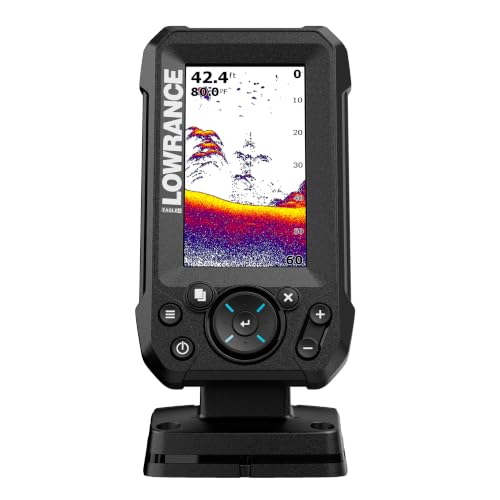
Lowrance Eagle 4X Fish Finder with Bullet Transducer
Lowrance Eagle 4X Fish Finder with Bullet Transducer | 4-inch IPS Display; wide-angle sonar coverage; autotuning sonar; easy twist-lock connector
Best for: Overall boat use with reliable bottom reading for catfish holes and channel edges.
This is a good fit for anglers who fish from a small or mid-size boat and want a clear, easy-to-read screen without a steep learning curve. Catfish anglers often need to read bottom hardness and find humps or drop-offs, and a wide sonar cone helps cover more of the bottom in one pass.
Key specs:
- 4-inch IPS display
- Wide-angle sonar coverage
- Autotuning sonar
- Bullet transducer with easy twist-lock connector
Pros:
- Bright, readable screen in daylight
- Autotuning reduces setup time for beginners
- Wide sonar cone helps locate structure faster
Cons:
- Requires a boat mount and power source
- Not portable enough for shore-only anglers
Bottom line: A strong first choice for boat anglers who want dependable bottom reading and simple setup.
View on AmazonGarmin 010-01550-00 Striker 4 with Transducer, 3.5″ GPS Fishfinder with Chirp
Garmin 010-01550-00 Striker 4 with Transducer, 3.5" GPS Fishfinder with Chirp
Best for: Boat-mounted catfish trips where GPS marking of productive spots matters.
Anglers who return to the same holes or drift the same channel benefit from saving waypoints. The CHIRP sonar gives sharper target separation than older sonar types, which helps when catfish suspend just above the bottom.
Key specs:
- 3.5-inch display
- GPS fishfinder with CHIRP sonar
- Transducer included
Pros:
- GPS waypoints simplify returning to productive spots
- CHIRP sonar improves target separation
- Well-known brand with broad owner support
Cons:
- Smaller screen than some competing units
- Menus take time to learn
Bottom line: Best for anglers who plan to mark and revisit catfish spots on a boat.
View on AmazonHandheld Fish Finder Portable Kayak Fishfinder Sonar Depth LCD Display
Handheld Fish Finder Portable Kayak Fishfinder Sonar Depth LCD Display | Reliable fish & depth readings, easy to use, great value for kayak/boat fishing
Best for: Kayak anglers who need depth and fish readings without a permanent mount.
Kayak catfishing often happens in shallow to moderate water where a compact handheld unit is easier to handle than a full chartplotter. This type of sonar gives depth and basic fish indication for working bottom structure.
Key specs:
- Handheld design with LCD depth display
- Portable sonar for kayak and boat use
Pros:
- Light and easy to carry between spots
- Simple readout for quick depth checks
- Practical value for small-water fishing
Cons:
- Limited detail compared with full-color units
- Smaller display can be harder to read in glare
Bottom line: A practical pick for kayak catfish anglers who value portability over detailed imaging.
View on AmazonVenterior Portable Rechargeable Fish Finder Wireless Sonar Sensor Fishfinder Depth Locator with Fish Size, Temperature, Bottom Contour, Color Display
Venterior Portable Rechargeable Fish Finder Wireless Sonar Sensor Fishfinder Depth Locator with Fish Size, Temperature, Bottom Contour, Color Display
Best for: Wireless shore and kayak setups that need a sensor separate from the display.
A wireless sensor lets you cast the transducer out to deeper water while the display stays in your hand or on your kayak deck. Bottom contour and temperature readings can help you locate ledges and thermoclines where catfish hold.
Key specs:
- Rechargeable portable unit
- Wireless sonar sensor
- Color display with bottom contour and temperature readings
Pros:
- Wireless sensor extends reach from shore or kayak
- Rechargeable design reduces battery replacement
- Bottom contour view helps read structure
Cons:
- Fish size estimates are approximate and should be treated as a guide
- Wireless links can be affected by distance and interference
Bottom line: Good for anglers who want to cast a sensor out and read the bottom from shore or a kayak.
View on AmazonGarmin Striker Vivid 4cv Fishfinder with Transducer
Garmin Striker Vivid 4cv Fishfinder with Transducer – 4-inch LCD Display – Easy-to-Use Scanning Sonar – Color Palettes, 11.2 Ounces (010-02550-00)
Best for: Anglers who want color imaging and scanning sonar for finding catfish holding on structure.
Color screens make it easier to separate hard bottom from soft mud and to spot the bright arches that indicate fish. Scanning sonar helps you survey a wider area without moving the boat as much.
Key specs:
- 4-inch color LCD display
- Scanning sonar
- Multiple color palettes
- Approximately 11.2 ounces
Pros:
- Color palettes help distinguish bottom types
- Scanning sonar covers a wider area
- Lightweight for its screen size
Cons:
- Color screen uses more power than monochrome units
- Mounting hardware is sold separately from some bundles
Bottom line: A solid choice for anglers who prefer clear color imaging on a boat or large kayak.
View on AmazonLUCKY Kayak Portable Fish Depth Finder Water Handheld Fish Finder Sonar Castable FFC1108
LUCKY Kayak Portable Fish Depth Finder Water Handheld Fish Finder Sonar Castable Kayak Boat Fishfinder Transducer Fishing LCD Display FFC1108
Best for: Budget-minded anglers who want a castable sonar for shallow catfish water.
A castable transducer lets you throw the sensor away from the kayak or bank and reel it back, which helps when catfish hold along weed edges or deeper pockets just beyond casting range.
Key specs:
- Castable transducer
- Handheld LCD display
- Kayak and boat compatible
Pros:
- Affordable entry point into sonar fishing
- Castable design reaches spots without a boat
- Simple display for quick depth checks
Cons:
- Basic feature set compared with premium units
- Owners often note that cable and mounting parts need care in rough use
Bottom line: A budget pick for anglers who want to try sonar before committing to a larger unit.
View on AmazonBuying Guide
Transducer Type
The transducer is the part that sends and receives sonar, and its style determines where you can use the unit. Bullet and through-hull transducers mount on a boat and give steady readings at speed. Castable and handheld transducers suit shore or kayak fishing. Match the transducer to how you fish, not just to the display size.
Good picks for this: Lowrance Eagle 4X Fish Finder with Bullet Transducer, Handheld Fish Finder Portable Kayak Fishfinder Sonar
Display Size and Readability
A 3.5 to 4-inch screen is usually enough for bottom reading and fish arches on a small boat. Larger screens help with detail but need more mounting space. Check whether the display stays readable in bright sun, since catfish often bite during low light and you may be fishing through midday glare.
Good picks for this: Garmin Striker Vivid 4cv Fishfinder, Garmin Striker 4 with Transducer
Sonar Type and Bottom Reading
CHIRP sonar separates targets more cleanly than traditional sonar, which helps when catfish sit close to bottom. Scanning sonar gives a wider picture. Look for depth readouts and bottom hardness features, since catfish frequently relate to specific bottom types such as hard clay, gravel or soft mud.
Good picks for this: Garmin Striker 4 with Transducer, Garmin Striker Vivid 4cv Fishfinder
Portability and Power
Consider how you will carry and power the unit. Handheld and wireless units often run on rechargeable or replaceable batteries, while boat-mounted units draw from the boat’s battery. Check runtime specifications and bring a spare power source on longer trips.
Good picks for this: Venterior Portable Rechargeable Fish Finder Wireless Sonar Sensor, Handheld Fish Finder Portable Kayak Fishfinder Sonar
Mounting and Fit
Boat-mounted units need a transom or trolling motor mount and room for the display where you can see it. Kayak anglers should check how the unit attaches to the deck or hull. Measure your mounting space before buying, and confirm that cables reach the power source without strain.
Good picks for this: Lowrance Eagle 4X Fish Finder with Bullet Transducer, Garmin Striker 4 with Transducer
GPS and Waypoints
If you plan to return to the same catfish holes, GPS waypoint marking saves time and helps you repeat successful drifts. Not every sonar unit includes GPS, so check the feature list if mapping matters to you.
Good picks for this: Garmin Striker 4 with Transducer
Durability and Care
Fishing electronics face water, sun, cold and impact. Rinse units with fresh water after saltwater or muddy trips, keep connectors dry and clean, and store the display out of direct heat. Check the manufacturer’s stated water-resistance rating and follow the care instructions in the manual.
Good picks for this: LUCKY Kayak Portable Fish Depth Finder FFC1108, Handheld Fish Finder Portable Kayak Fishfinder Sonar
FAQ
What is the best fish finder for catfish on a small boat?
For most small-boat anglers, a unit with a bullet or through-hull transducer and a 3.5 to 4-inch display offers a good balance of bottom reading and ease of use. The Lowrance Eagle 4X and Garmin Striker 4 are both commonly recommended for this setup.
Do I need CHIRP sonar to catch catfish?
No, but CHIRP sonar generally gives clearer target separation, which helps identify fish close to the bottom. Catfish can be caught without it, but better imaging makes it easier to locate them.
Can a kayak fish finder work for catfish?
Yes. Handheld and castable units are popular with kayak anglers because they are light and easy to deploy. They work well in shallow to moderate depths, though detail may be more limited than on a boat-mounted unit.
What depth range do I need?
Check the manufacturer’s stated depth range and match it to the water you fish. Many catfish holes are in shallow to moderate depths, but reservoir channels and river holes can be deeper. Choose a unit whose specified depth covers your typical water.
Is a color display worth it?
Color screens can make bottom types and fish arches easier to distinguish, which many anglers find helpful. Monochrome units can still perform well and often use less power, so the choice depends on your priorities.
How do I mount a fish finder on a boat?
Most boat-mounted units use a transom or trolling motor bracket, and the transducer is installed on the transom or through the hull depending on the model. Follow the manufacturer’s installation instructions and check that cables reach the power source without tension.
Conclusion
For boat anglers looking for a dependable all-around fish finder for catfish, the Lowrance Eagle 4X and Garmin Striker 4 are logical starting points, with the Striker 4 adding GPS waypoints. Kayak and shore anglers will likely prefer the handheld or wireless units, such as the Handheld Fish Finder Portable Kayak Fishfinder Sonar or the Venterior wireless sensor. The Garmin Striker Vivid 4cv suits anglers who want color imaging, and the LUCKY castable unit is a sensible budget entry point. Match the transducer and mounting style to where you fish, and the right choice will follow.
For more related reading, see Trolling Motor Fish Finder Combo: How to Choose and Mount One (2026), Top 5 Portable Fish Finder Depth Finder Picks for Shore, Kayak and Boat, Budget Friendly Fish Finder: 3 Best Picks for Shore, Kayak and Boat and 6 Best Batteries for Fish Finder Options for Kayaks and Boats (2026). Anglers pairing sonar with heavier tackle may also find 6 Best Braided Fishing Lines for Catfish: Picks Compared (2026) useful.
Sources
- Charts, depth data and safe navigation practices for coastal and inland waters (noaa.gov)
- Boating safety requirements, equipment guidance and on-water safety rules (uscg.mil)
- Fisheries management information and regulations for freshwater species (fws.gov)
About Caleb Morgan
Caleb Morgan is part of our editorial team and reviews and edits our saltwater fishing guides, checking product details against manufacturer specifications and owner feedback.
About the author
Caleb Morgan writes reviews and buying guides for Saltwater Fishing.