7 Best Fish Finders for Installing a Fish Finder: Mounting Picks Compared
Installing a fish finder is easier when you start with the right unit. Compare seven picks by mounting style, display, sonar type and best use before you buy.
 By Caleb Morgan
Updated November 10, 2026
 By Caleb Morgan
Updated November 2026
Installing a fish finder goes smoothly when the unit you pick matches your boat, your mounting surface and the kind of water you fish. Most buyers run into trouble not because the install is hard, but because they bought a transducer that does not suit their hull, a display too big for the console, or a portable unit that never gets properly secured. This guide compares seven fish finders across the criteria that matter most for installation: mount type, power source, transducer style, display size and the fishing situations each one suits. The picks run from full GPS striker units to castable and handheld sonar for kayaks and shore fishing.
Our top picks at a glance
- 1TOP CHOICEBest overallGarmin 010-01550-00 Striker 4 with Transducer, 3.5" GPS Fishfinder with ChirpView on Amazon
- 2
 TOP CHOICEBest for kayaks and shore castingDeeper Start Fish Finder – Portable and Depth Finder for RecreationalView on Amazon
- 3
 TOP CHOICEBest for compact console mountingGarmin Striker Vivid 4cv Fishfinder with Transducer – 4-inch LCD DisplayView on Amazon
- 4
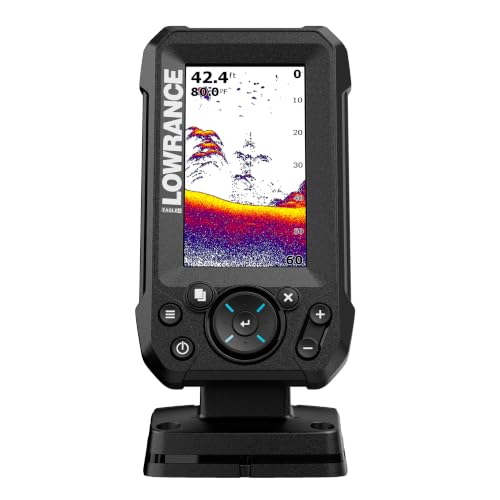 Best for a bigger screen on a boatLowrance Eagle 4X Fish Finder with Bullet TransducerView on Amazon
- 5
 Best for wireless, no-mount setupsVenterior Portable Rechargeable Fish Finder Wireless Sonar Sensor FishView on Amazon
- 6
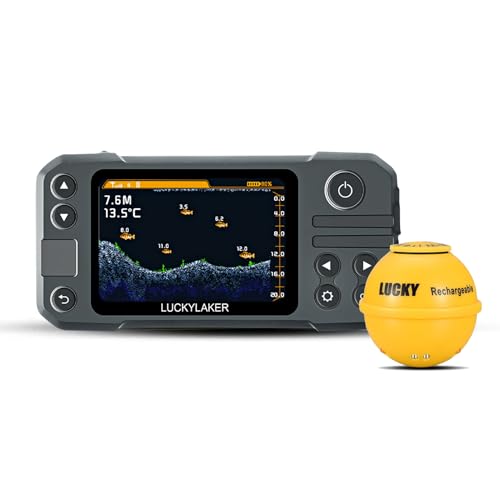 Best for kayak depth checksLUCKY Kayak Portable Fish Finder Transducer Wireless Sonar Fish FinderView on Amazon
- 7
 Best budget pickHandheld Fish Finder Portable Kayak Fishfinder Sonar Depth LCD DisplayView on Amazon
Selection criteria: This list is based on published manufacturer specifications, brand reputation for sonar performance, and patterns in owner feedback about mounting, battery life and ease of setup. None of these units were tested by the author.
Our Top Picks
Quick Comparison
| Product | Best for | Key feature |
|---|---|---|
| Garmin 010-01550-00 Striker 4 with Transducer | Overall boat use with GPS | 3.5-inch GPS fishfinder with CHIRP sonar |
| Venterior Portable Rechargeable Fish Finder | Wireless setups with no wiring | Wireless sonar sensor with fish size and temperature readout |
| Deeper Start Fish Finder | Shore, dock and kayak fishing | Castable smart sonar with a companion app |
| Lowrance Eagle 4X Fish Finder | Boat users wanting a larger display | 4-inch IPS display with autotuning sonar |
| LUCKY Kayak Portable Fish Finder Transducer | Kayak depth checks | Wireless portable sonar with a rechargeable unit |
| Garmin Striker Vivid 4cv Fishfinder | Compact console installs | 4-inch LCD with color palettes and scanning sonar |
| Handheld Fish Finder Portable Kayak Fishfinder | Budget kayak and boat use | Handheld sonar with depth and fish readings |
Garmin 010-01550-00 Striker 4 with Transducer, 3.5″ GPS Fishfinder with Chirp
Garmin 010-01550-00 Striker 4 with Transducer, 3.5" GPS Fishfinder with Chirp
Best for: Boat owners who want GPS mapping and sonar in one unit with a transducer included.
This is a good fit for anglers on small to mid-size boats who want to mark structure and waypoints without moving to a larger display. The included transducer is designed to mount on the transom or trolling motor, which keeps the install straightforward.
Key specs
- 3.5-inch display
- GPS fishfinder with CHIRP sonar
- Transducer included
Pros
- Transducer included, so no separate purchase is needed to start.
- GPS waypoint marking helps with returning to productive spots.
- CHIRP sonar gives clearer target separation than basic sonar.
Cons
- The 3.5-inch screen can feel small in bright sun on a large console.
- Transom mounting requires careful alignment to avoid turbulence readings.
Bottom line: A strong all-round choice for boat anglers who want GPS and sonar without a large footprint.
View on AmazonVenterior Portable Rechargeable Fish Finder Wireless Sonar Sensor Fishfinder Depth Locator with Fish Size, Temperature, Bottom Contour, Color Display
Venterior Portable Rechargeable Fish Finder Wireless Sonar Sensor Fishfinder Depth Locator with Fish Size, Temperature, Bottom Contour, Color Display
Best for: Anglers who want a wireless sensor with no transom or console mounting.
This unit suits shore anglers, kayakers and small boat users who need quick depth and bottom readings and do not want to drill or wire anything. Setup is mostly a matter of charging the unit and placing the sensor in the water.
Key specs
- Wireless sonar sensor
- Rechargeable unit
- Color display with bottom contour and temperature readout
Pros
- No permanent mounting, so installation takes only a few minutes.
- Portable and easy to move between vessels.
- Bottom contour and temperature readings help with basic fish location.
Cons
- Wireless range is limited compared with wired transducer systems.
- Owners often report that readings are less precise in deep or cluttered water.
Bottom line: Best for anglers who want simple, wireless depth finding and do not need detailed GPS mapping.
View on AmazonDeeper Start Fish Finder – Portable and Depth Finder for Recreational Fishing from Dock, Shore, Bank or Kayak | Castable Deeper Smart Sonar with Free User Friendly App
Deeper Start Fish Finder – Portable and Depth Finder for Recreational Fishing from Dock, Shore, Bank or Kayak | Castable Deeper Smart Sonar with Free User Friendly App
Best for: Shore, dock and kayak anglers who want to cast the sonar and read the results on a phone.
Deeper Start is designed to be cast out from the bank or dock, then retrieved while it reports depth and structure to a smartphone app. It fits anglers who fish from places where a traditional transducer cannot be mounted.
Key specs
- Castable smart sonar
- Connects to a companion app
- Portable, designed for dock, shore, bank and kayak use
Pros
- No mounting hardware needed; the unit is cast and retrieved.
- Phone-based display is easy to read on the water.
- Works well from places where permanent installs are not possible.
Cons
- Depends on phone battery and app connection.
- Not a substitute for a fixed transducer on a larger boat.
Bottom line: The right pick for anglers who fish from shore or kayaks and want sonar without any hardware installation.
View on AmazonLowrance Eagle 4X Fish Finder with Bullet Transducer
Lowrance Eagle 4X Fish Finder with Bullet Transducer | 4-inch IPS Display; wide-angle sonar coverage; autotuning sonar; easy twist-lock connector
Best for: Boat owners who want a larger 4-inch screen and a simple twist-lock transducer connection.
The Eagle 4X suits anglers who want a bigger screen than the smallest units without moving up to a large chartplotter. The bullet transducer and twist-lock connector are designed to make installation direct.
Key specs
- 4-inch IPS display
- Bullet transducer included
- Autotuning sonar and wide-angle coverage
- Twist-lock connector
Pros
- The IPS display generally holds up well in varied light.
- Autotuning sonar reduces the need for manual adjustment.
- Twist-lock connector simplifies cable hookup.
Cons
- Bullet transducers usually mount through the hull or on the transom, which takes more care than a simple clamp.
- Advanced mapping features are limited compared with higher-end chartplotters.
Bottom line: A solid choice for boaters who want a clearer screen and straightforward hookup.
View on AmazonLUCKY Kayak Portable Fish Finder Transducer Wireless Sonar Fish Finders Boat Rechargeable Handheld Fish Depth Finder Fishing MT-202
LUCKY Kayak Portable Fish Finder Transducer Wireless Sonar Fish Finders Boat Rechargeable Handheld Fish Depth Finder Fishing MT-202
Best for: Kayak anglers who need quick depth checks with a wireless handheld unit.
This model fits kayak and small boat anglers who want to check depth and find fish without running cables. The wireless design keeps the setup light and easy to move.
Key specs
- Wireless portable transducer
- Rechargeable handheld unit
- Depth finding for kayak and boat use
Pros
- No cables to route, which suits kayak installs.
- Lightweight and easy to store between trips.
- Rechargeable design avoids constant battery swaps.
Cons
- Owners often report that wireless signal can drop at longer distances.
- Display detail is basic compared with GPS units.
Bottom line: Best for kayakers who want a no-install depth finder for quick checks.
View on AmazonGarmin Striker Vivid 4cv Fishfinder with Transducer – 4-inch LCD Display
Garmin Striker Vivid 4cv Fishfinder with Transducer – 4-inch LCD Display – Easy-to-Use Scanning Sonar – Color Palettes, 11.2 Ounces (010-02550-00)
Best for: Anglers who want a compact console unit with color sonar and scanning features.
The Striker Vivid 4cv is aimed at boat owners with limited console space. Its 4-inch display and scanning sonar make it practical for mounting on small center consoles and bass boats.
Key specs
- 4-inch LCD display
- Scanning sonar
- Color palettes
- Transducer included
- Approximately 11.2 ounces (manufacturer listing)
Pros
- Light weight makes it easy to mount and remove.
- Color palettes help distinguish bottom and fish arches.
- Scanning sonar gives a wider view of the water column.
Cons
- Smaller screen can be harder to read at a distance.
- Lacks the broader mapping features of larger Garmin units.
Bottom line: A practical pick for anglers with limited console space who still want color sonar.
View on AmazonHandheld Fish Finder Portable Kayak Fishfinder Sonar Depth LCD Display
Handheld Fish Finder Portable Kayak Fishfinder Sonar Depth LCD Display | Reliable fish & depth readings, easy to use, great value for kayak/boat fishing
Best for: Budget-minded anglers who need basic depth and fish readings from a kayak or small boat.
This handheld unit is aimed at casual anglers who want simple sonar without a large investment. It suits occasional use from kayaks, rowboats and docks.
Key specs
- Handheld portable design
- LCD display for depth and fish readings
Pros
- Simple setup with no permanent mounting.
- Easy for beginners to understand.
- A practical budget option for occasional trips.
Cons
- Basic feature set compared with GPS and color units.
- Owners often report limited accuracy in deep or heavily structured water.
Bottom line: A sensible budget pick for kayak and small boat anglers who want basic depth finding.
View on AmazonBuying Guide
Mount type and installation method
Transom-mounted transducers are common on boats and require drilling or a bracket, so plan the location before you start. Trolling motor mounts are easier to move. Portable and castable units need no hardware at all. Check the mounting instructions before buying so you know whether you need tools or a mounting bracket.
Good picks for this: Garmin 010-01550-00 Striker 4 with Transducer, Lowrance Eagle 4X Fish Finder
Power source and battery life
Fixed units draw power from the boat battery through a fused connection. Portable units rely on rechargeable or replaceable batteries. Check the rated runtime and charging method. Keep a spare charge or battery for longer trips, and disconnect fixed units when the boat is stored.
Good picks for this: Venterior Portable Rechargeable Fish Finder, LUCKY Kayak Portable Fish Finder Transducer
Transducer type and placement
Transducers come in transom, through-hull and trolling motor styles. Transom mounts should sit in clean water, away from the motor and strakes. Through-hull installs require sealing and a clean surface. Castable sonar avoids hull work entirely, but readings depend on casting and retrieval technique.
Good picks for this: Deeper Start Fish Finder, Garmin Striker Vivid 4cv Fishfinder
Screen size and console fit
Measure the space on your console before you buy. A 3.5 to 4-inch display suits small consoles and kayak mounts. Larger screens are easier to read in bright sun but need more mounting room and may block sightlines. Consider a sun-shade or swivel mount if glare is a concern.
Good picks for this: Garmin Striker Vivid 4cv Fishfinder, Lowrance Eagle 4X Fish Finder
Use case: boat, kayak or shore
A boat owner who wants GPS and waypoints needs a different setup from a kayaker who needs quick depth checks. Shore anglers benefit from castable or handheld units. Match the unit to the water you fish most often, not just the features listed on the box.
Good picks for this: Deeper Start Fish Finder, Handheld Fish Finder Portable Kayak Fishfinder
Durability and waterproofing
Look for a waterproof rating on the display and transducer housing. Check the cable and connector design, since corroded connections are a common complaint in saltwater use. Rinse units with fresh water after each trip and store them out of direct sun.
Good picks for this: Garmin 010-01550-00 Striker 4 with Transducer, Lowrance Eagle 4X Fish Finder
Care and maintenance
Keep transducer faces clean and free of marine growth, which can weaken readings. Store portable units dry and charged. Check mounting hardware for corrosion each season, especially on saltwater boats. Update firmware when the manufacturer releases it.
Good picks for this: Venterior Portable Rechargeable Fish Finder, LUCKY Kayak Portable Fish Finder Transducer
FAQ
Do I need to drill a hole to install a fish finder?
Not always. Transom mounts usually use clamps or brackets, while through-hull installs require drilling and sealing. Portable, wireless and castable units need no drilling at all.
Where should a transducer be mounted on a boat?
Mount transom transducers in a spot with clean, undisturbed water, away from the motor, strakes and the boat’s wake. Follow the manufacturer’s guidance on depth and angle, and test the position in the water before final tightening.
Can I install a fish finder on a kayak?
Yes. Many kayak anglers use a portable or handheld unit, or a small transducer mounted with a kayak-specific bracket. Choose a lightweight model and secure all cables so they cannot snag on gear.
How do I power a fish finder?
Fixed units are normally wired to a 12-volt boat battery through a fused connection. Portable units run on rechargeable or replaceable batteries. Consult a marine electrician if you are unsure about wiring a fixed unit.
Why are my fish finder readings inaccurate after installation?
Common causes include air bubbles under the transducer, turbulence from the motor or hull, a transducer mounted at the wrong angle, or a dirty transducer face. Reposition the transducer and recheck in calm water.
Is a wireless fish finder as accurate as a wired one?
Wired transducer systems generally offer more consistent readings, especially in deep or cluttered water. Wireless units are convenient for quick depth checks but can lose signal at longer distances.
Conclusion
Installing a fish finder starts with matching the unit to your boat and water. The Garmin Striker 4 is a practical all-round choice for boat owners who want GPS, while the Deeper Start suits shore and kayak anglers who want no hardware at all. The Garmin Striker Vivid 4cv fits tight consoles, and the Lowrance Eagle 4X offers a larger screen. The wireless Venterior and LUCKY units suit quick depth checks, and the handheld model is a sensible budget choice for occasional use. Plan the mounting location before you start, and follow manufacturer instructions for wiring and transducer placement.
Sources
- Recreational boating safety guidance, including electrical and equipment standards for vessels (uscg.mil)
- Charts, depth data and marine navigation resources for U.S. waters (noaa.gov)
- Industry standards and boating equipment information from the National Marine Manufacturers Association
Related reading
- Yakattack Fish Finder Mount: 5 Best Picks Compared (2026)
- Trolling Motor Fish Finder Combo: How to Choose and Mount One (2026)
- Top 7 Chart Plotter Fish Finder Models with GPS and Charts (2026)
- Top 7 Best Inexpensive Fish Finders for Budget Anglers (2026)
- Top 5 Portable Fish Finder Depth Finder Picks for Shore, Kayak and Boat
- Top 5 Fish Finders with Camera Picks for Shore, Kayak and Boat
About Caleb Morgan
Caleb Morgan is part of our editorial team and reviews and edits our saltwater fishing guides, checking product details against manufacturer specifications and owner feedback.
About the author
Caleb Morgan writes reviews and buying guides for Saltwater Fishing.