7 Best Pontoon Boat Fish Finders for Every Angler (2026)
Find the best pontoon boat fish finder for your setup. We compare seven models on screen size, transducer type, mounting and owner feedback to help you choose.
 By Caleb Morgan
Updated November 9, 2026
 By Caleb Morgan
Updated November 2026
Choosing a pontoon boat fish finder is different from picking one for a small jon boat or kayak. Pontoons are wide, stable and often run in shallow lake and river water, so the right unit needs a bright screen you can read in full sun, a transducer that handles mixed depths, and a mounting spot that does not get in the way of the helm or the seating. This guide compares seven widely sold units using manufacturer specifications, brand reputation and common owner feedback. The criteria we weighted most were display size and clarity, sonar type (single beam, dual beam, CHIRP or DownScan), GPS and mapping support, transducer compatibility, and ease of installation.
Our top picks at a glance
- 1TOP CHOICEBest overallGarmin 010-01550-00 Striker 4 with Transducer, 3.5" GPS Fishfinder with ChirpView on Amazon
- 2
 TOP CHOICEBest for compact helm spacesHumminbird Helix 5 G3 GPS Fish Finder with Transducer & Dual Spectrum Chirp SonarView on Amazon
- 3
 TOP CHOICEBest for color-focused scanningGarmin Striker Vivid 4cv Fishfinder with Transducer – 4-inch LCD DisplayView on Amazon
- 4
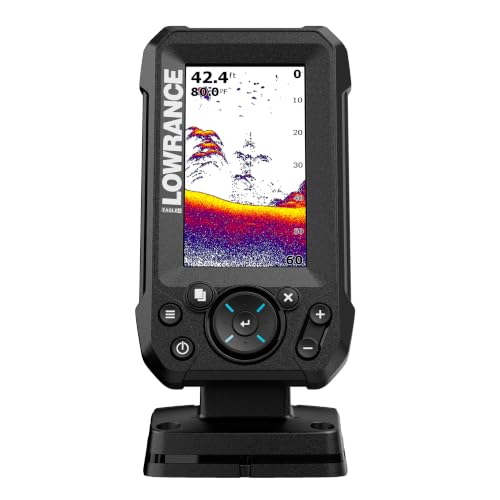 Best budget pickLowrance Eagle 4X Fish Finder with Bullet TransducerView on Amazon
- 5
 Best for a larger screenGarmin Striker Vivid 7cv, U.S. with GT20-TM TransducerView on Amazon
- 6
 Best for shallow-water anglersHumminbird PiranhaMAX 4 Fish Finder with Transducer, Dual Beam SonarView on Amazon
- 7
 Best for structure and downscan detailLowrance Eagle 5 SplitShot HD Fish Finder with C-MAP Inland ChartsView on Amazon
Our Top Picks
| Product | Best for | Key feature |
|---|---|---|
| Garmin Striker 4 with Transducer | Overall pontoon use | 3.5-inch CHIRP sonar with GPS |
| Humminbird Helix 5 G3 | Compact helm spaces | Dual Spectrum CHIRP sonar |
| Garmin Striker Vivid 4cv | Color-focused scanning | Scanning sonar with color palettes |
| Lowrance Eagle 4X | Budget-minded buyers | Autotuning sonar and wide-angle coverage |
| Garmin Striker Vivid 7cv | Larger screen preference | 7-inch color display with scanning sonar |
| Humminbird PiranhaMAX 4 | Shallow-water fishing | Dual beam sonar |
| Lowrance Eagle 5 SplitShot HD | Structure and downscan detail | DownScan with FishReveal and Genesis Live mapping |
Garmin 010-01550-00 Striker 4 with Transducer, 3.5″ GPS Fishfinder with Chirp
Garmin 010-01550-00 Striker 4 with Transducer, 3.5" GPS Fishfinder with Chirp
Best for: Overall pontoon use with a balance of price-to-feature value
Owners who want a dependable first fish finder for a pontoon usually start here. It is compact enough for most console or rail mounts and includes GPS, so you can mark spots and return to them.
Key specs
- 3.5-inch display
- CHIRP sonar
- Built-in GPS
- Transducer included
Pros
- Simple menus that are easy to learn on the water
- GPS waypoint marking for repeat trips
- Good balance of size and capability for a mid-size pontoon
Cons
- Smaller screen can feel tight for side-by-side split views
- Limited mapping compared with larger units
Bottom line: A strong default choice for anglers who want reliable sonar and GPS without a large footprint.
View on AmazonHumminbird Helix 5 G3 GPS Fish Finder with Transducer & Dual Spectrum Chirp Sonar
Humminbird Helix 5 G3 GPS Fish Finder with Transducer & Dual Spectrum Chirp Sonar
Best for: Compact helm spaces where a mid-size display still needs to show detail
This unit suits pontoon owners who want more screen real estate than a 3.5-inch model without moving to a large console. Dual Spectrum CHIRP covers both wide and narrow views.
Key specs
- 5-inch display
- Dual Spectrum CHIRP sonar
- GPS with transducer included
Pros
- Dual Spectrum CHIRP gives flexible views of fish and bottom
- Screen size works well on small consoles
- Established brand with wide accessory support
Cons
- Menu depth takes some time to master
- Mounting bracket options depend on your helm layout
Bottom line: Best for anglers who want more detail than a basic 4-inch unit without oversized hardware.
View on AmazonGarmin Striker Vivid 4cv Fishfinder with Transducer – 4-inch LCD Display
Garmin Striker Vivid 4cv Fishfinder with Transducer – 4-inch LCD Display – Easy-to-Use Scanning Sonar – Color Palettes, 11.2 Ounces (010-02550-00)
Best for: Color-focused scanning and easy-to-read fish arches
The Vivid line is aimed at anglers who want color palettes that make targets and bottom contours stand out in bright conditions. The 4-inch screen is a good fit for a pontoon’s front rail or dash.
Key specs
- 4-inch LCD display
- Scanning sonar
- Multiple color palettes
- Weighs 11.2 ounces per listing
Pros
- Color palettes improve readability in direct sun
- Lightweight and easy to move between boats
- Scanning sonar shows wide areas around the boat
Cons
- Smaller display limits multi-panel views
- Owners often mention wanting more mapping options
Bottom line: A good pick for anglers who prioritize clear color imagery and a lightweight, compact unit.
View on AmazonLowrance Eagle 4X Fish Finder with Bullet Transducer
Lowrance Eagle 4X Fish Finder with Bullet Transducer | 4-inch IPS Display; wide-angle sonar coverage; autotuning sonar; easy twist-lock connector
Best for: Budget-minded buyers who still want autotuning sonar
Anglers on a tighter spending plan often look at the Eagle 4X because it covers the basics with a 4-inch IPS screen and wide-angle sonar coverage.
Key specs
- 4-inch IPS display
- Wide-angle sonar coverage
- Autotuning sonar
- Bullet transducer with twist-lock connector
Pros
- Autotuning reduces setup time
- Twist-lock connector simplifies installation
- IPS screen holds clarity at wider viewing angles
Cons
- Fewer advanced features than higher-tier Lowrance units
- Smaller screen limits detail on busy structure
Bottom line: A practical budget pick for pontoon anglers who want straightforward sonar without extras they will not use.
View on AmazonGarmin Striker Vivid 7cv, U.S. with GT20-TM Transducer
Garmin Striker Vivid 7cv, U.S. with GT20-TM Transducer – Easy-to-Use 7-inch Color Fishfinder and Sonar Transducer, Vivid Scanning Sonar Color Palettes (010-02552-00)
Best for: Anglers who want a larger screen on a pontoon with room at the helm
A 7-inch display is easier to read from a seated position and shows more of the water column at once. This model suits larger pontoons with a dedicated console.
Key specs
- 7-inch color display
- Vivid scanning sonar
- GT20-TM transducer
Pros
- Large screen is easy to read at a glance
- Color palettes help separate fish from structure
- Transducer included for straightforward setup
Cons
- Requires more mounting space than compact units
- Higher power draw than smaller screens
Bottom line: The right choice when screen size is a top priority and your helm has room for it.
View on AmazonHumminbird PiranhaMAX 4 Fish Finder with Transducer, Dual Beam Sonar
Humminbird PiranhaMAX 4 Fish Finder with Transducer, Dual Beam Sonar
Best for: Shallow-water fishing in lakes and rivers
Dual beam sonar gives two coverage patterns, which helps when you want a wide view of bait and a narrower look at the bottom. It is a common choice for anglers who fish shallow flats and weed edges.
Key specs
- 4-inch display
- Dual beam sonar
- Transducer included
Pros
- Dual beam offers two useful coverage views
- Simple layout for quick reading
- Suits shallow water where detail matters most
Cons
- Fewer features than newer CHIRP-based units
- Limited GPS and mapping capability
Bottom line: A solid pick for shallow-water pontoon anglers who want dual beam coverage without complex menus.
View on AmazonLowrance Eagle 5 SplitShot HD Fish Finder with C-MAP Inland Charts
Lowrance Eagle 5 SplitShot HD Fish Finder with C-MAP Inland Charts | 5-inch IPS Display; CHIRP and DownScan with FishReveal; autotuning sonar; Genesis Live mapping; easy twist-lock connector
Best for: Structure hunting and downscan detail with built-in mapping
This unit combines CHIRP, DownScan and Genesis Live mapping on a 5-inch IPS screen. It is aimed at anglers who fish reefs, humps and drop-offs and want to see structure in detail.
Key specs
- 5-inch IPS display
- CHIRP and DownScan with FishReveal
- Autotuning sonar
- Genesis Live mapping
- C-MAP Inland charts included
Pros
- DownScan shows fine structure and bait clearly
- Genesis Live mapping supports on-water charting
- Twist-lock connector speeds installation
Cons
- Mapping features add complexity during initial setup
- Higher feature set can be more than casual anglers need
Bottom line: Best for anglers who fish structure-rich water and want downscan detail and mapping in one unit.
View on AmazonBuying Guide
Screen size and helm fit
Measure the space on your console or rail before you buy. A 4-inch display fits most dash and rail mounts, while 5- and 7-inch units need a wider, flatter surface. Make sure you can read the screen from the seated position where you will normally fish.
Good picks for this: Humminbird Helix 5 G3, Garmin Striker Vivid 7cv
Sonar type: CHIRP, dual beam and DownScan
CHIRP sonar sends a sweep of frequencies and typically gives sharper target separation than single-frequency sonar. Dual beam gives a wide and a narrow view at once, which helps in shallow water. DownScan produces a photo-like image of the bottom and structure directly below the boat.
Good picks for this: Humminbird PiranhaMAX 4, Lowrance Eagle 5 SplitShot HD
GPS and mapping support
If you plan to mark spots and return to them, check for built-in GPS and waypoint storage. Mapping adds value on lakes you fish often, since it shows contours and depth ranges. Confirm which chart cards or downloads a model supports before buying.
Good picks for this: Garmin Striker 4 with Transducer, Lowrance Eagle 5 SplitShot HD
Transducer type and mounting
Transducers come in transom, trolling motor and through-hull styles. Check the mounting type your pontoon supports and whether the transducer is included. Keep the transducer clear of the motor cavitation plate and in water that stays flat when the boat is under way.
Good picks for this: Lowrance Eagle 4X, Garmin Striker Vivid 4cv
Power draw and battery use
Larger, brighter screens draw more current. Pontoon anglers who run the unit from a dedicated battery should check the amp draw listed in the manufacturer’s specifications and compare it against battery capacity for a full day on the water.
Good picks for this: Garmin Striker Vivid 4cv, Humminbird Helix 5 G3
Durability and water protection
Look for a waterproof rating that matches your conditions. Pontoons see spray, rain and sun, so a sealed case and a sun-readable display matter. Keep the unit covered when not in use and rinse the screen with fresh water after saltwater use.
Good picks for this: Garmin Striker 4 with Transducer, Humminbird PiranhaMAX 4
Ease of use and menus
Simple menus help when you are driving and fishing at the same time. Autotuning and clear preset modes reduce setup time. If you are new to sonar, a unit with fewer menu layers can be easier to learn.
Good picks for this: Lowrance Eagle 4X, Garmin Striker Vivid 4cv
FAQ
What size fish finder works best on a pontoon boat?
Most pontoon owners choose between 4- and 7-inch screens. A 4-inch unit suits a small rail or dash mount, while a 7-inch unit works better on a console with a dedicated spot. Choose the largest screen your helm can comfortably hold without blocking controls.
Do I need GPS on a pontoon fish finder?
GPS is useful if you want to mark productive spots, return to them and follow lake maps. If you only fish a familiar lake and rely on visual sonar, a unit without GPS can still work well.
Is CHIRP sonar worth it for pontoon fishing?
CHIRP sonar generally produces clearer target separation than standard single-frequency sonar, which helps when fish sit close to bottom or structure. Many anglers consider it a worthwhile upgrade for pontoon use.
Can I mount a fish finder on the pontoon railing?
Yes. Rail mounts are common on pontoons. Confirm the bracket fits your rail diameter and that the screen can be read from where you sit. Keep cables clear of moving parts and sharp edges.
How do I install the transducer on a pontoon boat?
Transom mounts are the most common on pontoons. Set the transducer so it sits flat in the water when the boat is under way, away from the motor’s cavitation area. Follow the manufacturer’s instructions for depth and alignment, and consult a marine technician if you are unsure.
Should I choose a budget fish finder or a premium model?
A budget unit with autotuning and a clear screen covers most casual pontoon use. Premium models add larger screens, advanced mapping and downscan features. Match the feature set to how often you fish and the type of water you cover.
Conclusion
For most pontoon owners, the Garmin Striker 4 is a sensible starting point, with GPS and CHIRP at a manageable size. Anglers who want more screen space should look at the Humminbird Helix 5 G3 or Garmin Striker Vivid 7cv. Shallow-water fishermen may prefer the Humminbird PiranhaMAX 4, while structure-focused anglers will get the most from the Lowrance Eagle 5 SplitShot HD. Budget buyers should consider the Lowrance Eagle 4X. Measure your helm, confirm your transducer mount, and choose the screen and sonar type that match where you fish.
Sources
- Boating safety guidance, equipment requirements and recreational boating regulations (uscg.mil)
- Fisheries management information and regional fishing regulations for inland waters (fws.gov)
- Practical advice on boat electronics installation and marine wiring (boatus.org)
Related reading
- Top 5 Portable Fish Finder Depth Finder Picks for Shore, Kayak and Boat
- 7 Best Fish Finders for a Boat Options for Every Angler (2026)
- 7 Best Fish Finders for Small Boats: Top Picks Compared (2026)
About Caleb Morgan
Caleb Morgan is part of our editorial team and reviews and edits our saltwater fishing guides, checking product details against manufacturer specifications and owner feedback.
About the author
Caleb Morgan writes reviews and buying guides for Saltwater Fishing.