5 Best Inshore Saltwater Rods for Anglers Who Fish the Flats and Bays (2026)
Compare the best inshore saltwater rod options for flats, bays and jetties. See key specs, pros, cons and which rod fits your fishing style.
 By Ethan Brooks
Updated November 24, 2026
 By Ethan Brooks
Updated November 2026
Choosing the best inshore saltwater rod comes down to matching the rod’s length, power and action to the fish you chase and the lures you throw. Inshore anglers usually work shallow flats, oyster bars, creek mouths and grass lines, where redfish, speckled trout, snook and flounder feed within casting range. A good rod in this setting needs enough backbone to turn a red away from structure, enough tip sensitivity to feel a light bite on a soft plastic, and enough length to make long casts into wind. The picks below were compared on rod length, power and lure rating, blank material, handle design, and the patterns owners tend to report after months of use.
Our top picks at a glance
- 1TOP CHOICEBest overallUgly Stik 7'6" Carbon Inshore Spinning RodView on Amazon
- 2
 TOP CHOICEBest for complete beginnersUgly Stik 7' Complete Saltwater Kit Fishing Rod and Reel ComboView on Amazon
- 3
 TOP CHOICEBest for heavier redfish and snookPenn Squadron IV Inshore Spinning Rod, 7' 1-PieceView on Amazon
- 4
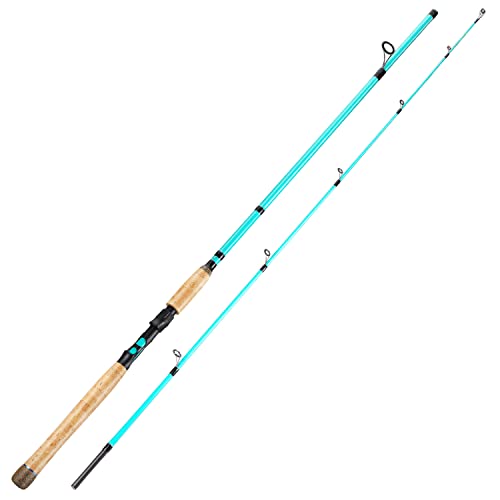 Best budget pickSougayilang Inshore Saltwater Fishing RodsView on Amazon
- 5
 Best for sensitive, premium-feel castingOkuma SRT Inshore Premier Carbon Blank Saltwater RodView on Amazon
Selection criteria used: length between 6’6″ and 7’6″, power rated medium to medium-heavy, a line and lure rating that matches common inshore tackle, a blank material with a reputation for sensitivity, and a build that suits both spinning and casting setups.
Our Top Picks
Quick Comparison
| Product | Best for | Key feature |
|---|---|---|
| Ugly Stik 7’6″ Carbon Inshore Spinning Rod | General inshore spinning | Carbon construction, 1/4–1 oz lure rating |
| Sougayilang Inshore Saltwater Fishing Rods | Budget-minded anglers | IM7 Toray carbon blank, cork handle |
| Ugly Stik 7′ Complete Saltwater Kit | Beginners wanting a ready-to-fish setup | Two-piece telescopic rod with matched reel |
| Penn Squadron IV Inshore Spinning Rod | Heavier inshore species | Medium-heavy power, 12–20 lb line rating |
| Okuma SRT Inshore Premier Carbon Blank | Casting and lure feel | Premier carbon blank, medium power |
Ugly Stik 7’6″ Carbon Inshore Spinning Rod
Ugly Stik 7'6" Carbon Inshore Spinning Rod, 1-Piece Fishing Rod, Medium Rod Power, 10-17 lb Line Rating, 1/4-1 oz Lure Rating
Best for: General inshore spinning with a balance of backbone and sensitivity
This one suits anglers who want a single rod to cover flats, creeks and jetty work with light to mid-weight soft plastics and small topwater plugs. The longer 7’6″ length helps with casting distance on windy days.
Key specs
- Length: 7’6″
- Action: 1-piece
- Power: Medium
- Line rating: 10–17 lb
- Lure rating: 1/4–1 oz
Pros
- Carbon construction keeps the rod light for long sessions
- Line and lure ratings match common inshore spinning tackle
- One-piece design has no ferrule to work loose
Cons
- One-piece length is harder to transport in a small vehicle
- Medium power may feel light for big bull reds
Bottom line: A strong first choice for anglers who want one versatile inshore spinning rod at a 7’6″ length.
View on AmazonSougayilang Inshore Saltwater Fishing Rods
Sougayilang Inshore Saltwater Fishing Rods, Spinning Rods and Casting Rods with AAA Cork Handles,IM7 Toray Carbon Blanks- 7' (Blue- Spinning)
Best for: Budget pick for anglers who want carbon blanks and a cork grip without a premium price tag
This rod is aimed at anglers building a first inshore setup or adding a second rod for trout and flounder. The IM7 carbon blank and cork handle are the features most often mentioned in owner descriptions.
Key specs
- Length: 7′
- Blank: IM7 Toray carbon
- Handle: AAA cork
- Available in spinning and casting versions
Pros
- Carbon blank offers good sensitivity for the category
- Cork handle is comfortable in warm, wet conditions
- Good entry point for multiple setups
Cons
- Brand is less established than the Ugly Stik or Penn lines
- Limited detail published on exact power and lure ratings
Bottom line: A sensible budget pick for anglers who value carbon construction and cork handles over brand recognition.
View on AmazonUgly Stik 7′ Complete Saltwater Kit Fishing Rod and Reel Combo
Ugly Stik 7’ Complete Saltwater Kit Fishing Rod and Reel Spinning Combo, Ugly Tech Construction with Clear Tip Design, 7’ Telescopic – 2-Piece Rod,Black
Best for: Beginners who want a rod and reel matched out of the box
This combo is designed for someone who does not yet own tackle and wants to start fishing the same day. The two-piece telescopic rod folds down for storage, which helps for kayak or boat use.
Key specs
- Length: 7′
- Construction: Two-piece telescopic
- Includes matched spinning reel
- Clear tip design for bite visibility
Pros
- Rod and reel are matched, which removes guesswork
- Two-piece design packs down compactly
- Clear tip makes light bites easy to see
Cons
- Included reel is an entry-level model that may need upgrading later
- Two-piece joint is a possible failure point compared with one-piece blanks
Bottom line: The simplest route into inshore fishing for a beginner who wants everything in one box.
View on AmazonPenn Squadron IV Inshore Spinning Rod, 7′ 1-Piece
Penn Squadron IV Inshore Spinning Rod, 7', 1-Piece Saltwater Fishing Rod, Medium Heavy Power, 12-20 lb Line Rating, 1/2-1 1/2 oz Lure Rating
Best for: Heavier inshore species such as redfish, snook and larger trout
This rod suits anglers who fish around heavier cover, docks or current, where a stiffer blank helps turn fish quickly. The medium-heavy power is the main reason to choose it over the medium-power options above.
Key specs
- Length: 7′
- Action: 1-piece
- Power: Medium heavy
- Line rating: 12–20 lb
- Lure rating: 1/2–1 1/2 oz
Pros
- Medium-heavy power handles heavier fish near structure
- Wider lure rating accepts bigger jigs and spoons
- One-piece blank avoids joint weak points
Cons
- Stiffer feel can reduce bite detection on very light baits
- Heavier weight than medium-power rods
Bottom line: The right pick when your target list leans toward bigger reds, snook and fish that live around cover.
View on AmazonOkuma SRT Inshore Premier Carbon Blank Saltwater Rod
Okuma SRT Inshore Premier Carbon Blank Saltwater Rod, SRTP-S-701M
Best for: Anglers who want a premium carbon feel for casting and precise lure work
This rod is for anglers who spend most of their time working soft plastics and small hard baits and who notice differences in blank feel. It is the most specialized of the five and rewards careful casting technique.
Key specs
- Model: SRTP-S-701M
- Blank: Premier carbon
- Power: Medium
- Designed for saltwater inshore use
Pros
- Premier carbon blank is built for sensitivity
- Medium power suits finesse presentations
- Well-regarded brand in saltwater tackle
Cons
- Specific line and lure ratings are not stated in the listing name
- Less forgiving for beginners who tend to horse fish
Bottom line: A good fit for experienced inshore anglers who value feel and fine presentations over raw backbone.
View on AmazonBuying Guide
Rod length
Inshore rods typically fall between 6’6″ and 7’6″. Shorter rods help with pinpoint casts under docks and in mangroves, while longer rods add casting distance over flats and help keep line off the water when you are fishing from a kayak or skiff. Most anglers start with a 7′ rod as a practical middle ground.
Good picks for this: Ugly Stik 7’6″ Carbon Inshore Spinning Rod, Sougayilang Inshore Saltwater Fishing Rods
Power and action
Power describes how much force a rod needs to bend; action describes where it bends. Medium power is the most common inshore choice. Medium-heavy power helps when you need to muscle larger redfish away from structure. Fast action gives better hook sets, while moderate action cushions runs.
Good picks for this: Penn Squadron IV Inshore Spinning Rod, Okuma SRT Inshore Premier Carbon Blank Saltwater Rod
Line and lure rating
Manufacturers print a line rating and a lure rating on the blank. Staying inside both ranges protects the rod and gives you predictable casts. Match the line to your reel spool and the lure weight to your target species and wind conditions.
Good picks for this: Ugly Stik 7’6″ Carbon Inshore Spinning Rod, Penn Squadron IV Inshore Spinning Rod
Blank material
Carbon blanks are lighter and more sensitive than fiberglass, which makes them the usual choice for inshore work. Higher-modulus carbon, such as the IM7 grade named on some listings, generally offers a lighter and more responsive feel, though the difference is most noticeable to experienced anglers.
Good picks for this: Sougayilang Inshore Saltwater Fishing Rods, Okuma SRT Inshore Premier Carbon Blank Saltwater Rod
One-piece versus two-piece construction
One-piece rods have no ferrule to fail and tend to feel more consistent. Two-piece rods pack down for travel, car storage and kayak use. If you fish from land or a boat with room, one-piece is often preferred. If space is tight, a two-piece telescopic design is more practical.
Good picks for this: Ugly Stik 7′ Complete Saltwater Kit Fishing Rod and Reel Combo, Ugly Stik 7’6″ Carbon Inshore Spinning Rod
Handle and grip
Cork handles resist moisture and feel warm in cold weather, while EVA foam grips are lighter and less costly to replace. Choose a handle length that lets your hand sit comfortably with the reel foot clear, especially if you cast all day.
Good picks for this: Sougayilang Inshore Saltwater Fishing Rods, Okuma SRT Inshore Premier Carbon Blank Saltwater Rod
Care and corrosion resistance
Saltwater is hard on tackle. Rinse the rod and reel with fresh water after every trip, dry the guides, and store the rod out of direct sun. Check guides for chips and the reel seat for grit. Consult the manufacturer’s care instructions for your specific model.
Good picks for this: Ugly Stik 7′ Complete Saltwater Kit Fishing Rod and Reel Combo, Penn Squadron IV Inshore Spinning Rod
FAQ
What is the best length for an inshore saltwater rod?
A 7′ rod is the most common choice for inshore work. It gives enough length for distance casts over flats and enough control for working lures near docks and grass. Shorter rods suit tight spots and longer rods suit open water.
Is a medium or medium-heavy power rod better for inshore fishing?
Medium power handles most inshore species, including trout, flounder and smaller reds. Medium-heavy power is better when you regularly fish heavier cover or target larger fish. If you are unsure, medium is the safer all-around starting point.
Do I need a carbon rod for inshore saltwater fishing?
Carbon is not required, but it is common because it is light and sensitive. Fiberglass rods are more forgiving and cost less, so they remain a sensible choice for beginners who expect to bump rods on docks and boat rails.
What line and lure ratings should I look for?
Choose a rod whose line rating covers the line you plan to use, and whose lure rating covers the weights you throw. Staying within the printed ranges helps protect the blank and gives more predictable casts.
Can one rod cover all inshore species?
A medium to medium-heavy 7′ spinning rod covers most inshore species, including trout, redfish and flounder. Specialized fishing for snook around heavy cover or for very light finesse baits may call for a second rod.
Should I buy a combo or a rod alone?
A combo is convenient for beginners because the rod and reel are matched. Buying the rod alone lets experienced anglers choose a reel that suits their line capacity and drag preferences. Both approaches work well.
Where can I read more about line and tackle selection?
For background on related tackle choices, see our guide to Top 6 Best Braided Lines for Inshore Saltwater Fishing (2026) and 5 Best Saltwater Fishing Rods for Beginners (2026). Anglers pairing a rod with a braid may also find Seaguar Inshore Fluorocarbon Leader: How to Rig and Choose One for Saltwater useful for leader selection.
Conclusion
The best inshore saltwater rod depends on your target species, your casting style and how you transport your gear. The Ugly Stik 7’6″ Carbon Inshore Spinning Rod is a versatile first choice for general inshore work. The Ugly Stik 7′ Complete Saltwater Kit suits beginners who want a matched setup. The Penn Squadron IV Inshore Spinning Rod fits anglers targeting heavier reds and snook around structure. The Sougayilang rod offers a budget-minded carbon option, and the Okuma SRT Inshore Premier Carbon Blank Saltwater Rod suits experienced anglers who prioritize feel and precise lure work. Match the power and length to your fishing, and the rest of your tackle choices will fall into place.
Sources
- Marine weather, tide and coastal conditions that affect inshore fishing trips (noaa.gov)
- Fishing regulations, species information and conservation guidance for U.S. waters (fws.gov)
- Background on coastal habitats such as estuaries, seagrass and oyster reefs (usgs.gov)
Before you buy: helpful guides
Related reading
About Ethan Brooks
Ethan Brooks is part of our editorial team and reviews and edits our saltwater fishing guides, checking product details against manufacturer specifications and owner feedback.
About the author
Ethan Brooks writes reviews and buying guides for Saltwater Fishing.