Humminbird Helix 5 G2 Fish Finder Review: Is It Worth It?
Humminbird Helix 5 G2 fish finder review: specs, pros and cons, who should buy it, and how it compares to the G3 and Helix 7 before you decide.
 By Caleb Morgan
Updated November 24, 2026
 By Caleb Morgan
Updated November 2026
The humminbird helix 5 g2 fish finder is a compact, GPS-equipped sonar unit aimed at anglers who want reliable depth readings, fish arches and basic mapping without paying for a large screen or advanced side imaging. It suits small boat owners, kayak anglers and inshore fishermen running bays, flats and nearshore structure who want a straightforward unit that mounts easily. It is less suited to offshore anglers who need long-range mapping, anyone who wants side or down imaging, or buyers who plan to run several displays across a larger console. Because the G2 is an earlier generation, newer G3 and G4 models offer updated software and more options, so it is worth checking whether the older model still fits your budget and your fishing style.
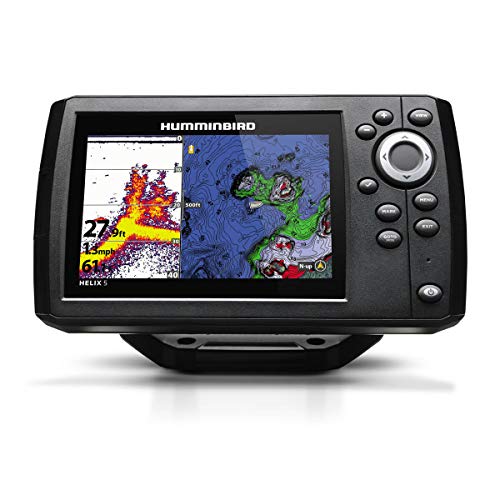
Humminbird 410210-1 HELIX 5 CHIRP GPS G2 Fish finder, Black
Product Overview
The Humminbird 410210-1 HELIX 5 CHIRP GPS G2 is a 5-inch fish finder in the Helix line, Humminbird’s mid-range family of sonar units. The listing identifies it as a CHIRP unit with GPS, which means it uses frequency-sweeping sonar for clearer target separation than older standard sonar, and it can log your position and mark waypoints. It is sold in black and is designed to be paired with a transducer, which is typically included with the kit.
The G2 designation places it in the second generation of the Helix 5 lineup. Later versions, including the G3 and newer models, have been introduced with updated processors and features, so the G2 is best understood as a capable but older-generation option. If you are interested in the broader family, our guide to Fish Finder Humminbird Helix 5 Review: Is It Worth It? covers how the Helix 5 generally performs, and you can compare sizes in Humminbird Fish Finder Models: 6 Lineups Compared for Saltwater Anglers (2026).
Key Features & Specifications
The table below lists the features that are stated in the product name or are well established for this model. Confirm exact dimensions, transducer details and mounting specifications on the manufacturer’s current documentation before you buy, since details can vary between kit configurations.
| Feature | What it means for you |
|---|---|
| Display size: 5-inch class | Compact screen that fits small consoles, kayaks and tiller boats. |
| CHIRP sonar | Sweeps a range of frequencies to separate fish and structure more clearly than standard single-frequency sonar. |
| GPS receiver | Records position, marks waypoints and supports basic navigation overlays. |
| Transducer-based operation | The transducer sends and receives the sonar signal and is the main determinant of depth and coverage performance. |
| Color | Black housing. |
| Generation | G2, the second-generation Helix 5 design. |
Pros & Cons
Pros
- Compact footprint suits small boats, kayaks and crowded helm stations.
- CHIRP sonar gives cleaner fish arches and bottom detail than standard sonar.
- GPS capability allows waypoint marking and return-to-spot navigation.
- Typically easier to mount and power than larger multi-display units.
- Owners often report that it is a practical entry point into the Helix family.
Cons
- As a G2 model, it lacks the newer software and features found on the G3 and later units.
- The 5-inch screen limits how much map and sonar history you can view at once.
- Advanced imaging options such as side or down imaging are not part of the core promise of this model.
- Mapping coverage depends on the chart data you purchase separately, which adds to total cost of ownership.
- Owners sometimes mention that mounting and transducer placement require care to get clean readings.
Performance Analysis
Performance on a fish finder comes down to three things: how well the transducer is placed, how the CHIRP sonar handles noise and clutter, and how legible the display is in direct sun. Based on the specifications and on common patterns in owner feedback, the G2 handles the core job well. Its CHIRP processing is generally described as producing clearer fish symbols and bottom contours than standard sonar, which matters most in shallow inshore water where fish sit close to structure and noise from the boat can clutter the screen.
Depth capability and sonar range depend heavily on the transducer and the water conditions. Owners of Helix-class units often report reliable readings in typical nearshore depths, but very deep offshore water or muddy, sediment-heavy bottoms can reduce performance. Turbulence from a bow-mounted or poorly angled transducer, and aeration from a fast-moving hull, are the most common reasons for weak readings. Mounting the transducer on a smooth, level part of the transom and keeping it submerged is usually the first fix to try.
The GPS function is useful for marking productive spots and returning to them, but it is not a substitute for a dedicated chartplotter with detailed cartography. If you plan to navigate unfamiliar waters or run long offshore passages, you will want to check whether the chart coverage you need is available for this unit before you commit.
Who Should Buy This Product?
This unit fits anglers who fish from small or mid-size boats, kayaks or bank-adjacent platforms where space is limited and the main goals are finding fish, reading depth and marking spots. It is a sensible choice for inshore anglers working oyster bars, grass flats, jetties and nearshore reefs, where CHIRP detail and a compact screen are most useful.
It is a weaker choice for anglers who want the newest software, who need large-screen mapping, or who plan to use advanced imaging. Serious offshore anglers, tournament fishermen and anyone outfitting a large console with multiple displays will likely be happier with a larger Helix model or a newer generation. If you are unsure which screen size suits your boat, our guide to 5 Best Humminbird Helix 7 Fish Finder Models Compared (2026) shows how the larger Helix line compares.
Buying Guide
Before buying any fish finder, check the following points. Each one affects whether the unit will perform the way you expect on your water.
- Screen size. A 5-inch display is best for small boats and single-angler setups. If you need to see sonar history and a map at the same time, a 7-inch or larger screen is more comfortable.
- Sonar type. CHIRP improves target separation and is worth having for most saltwater fishing. For a deeper explanation, see What Is Chirp on a Fish Finder? CHIRP vs Standard Sonar (2026).
- Transducer. The transducer determines depth range and beam angle. Confirm that the kit includes the transducer you need for your hull type and depth range. Our overview of What Is a Transducer on a Fish Finder? Transducer vs Display (2026) explains how the two parts work together.
- Mounting. Plan your mount position before you buy. A stable, flat, accessible spot improves both readings and usability. Humminbird Fish Finder Mount: How to Choose and Install One Right walks through the main options.
- Generation and software. Newer generations usually bring updated features. If the G2 is priced close to a G3, the newer unit is often the better long-term value.
Several well-known alternatives are worth comparing. The Helix 5 G3 is the direct successor in the same screen size and adds updated software, making it the most natural upgrade. Consider it here:

Humminbird Helix 5 G3 GPS Fish Finder with Transducer & Dual Spectrum Chirp Sonar
If you want a larger screen and more room for mapping and sonar, the Helix 7 G4 offers a bigger display, dual-spectrum CHIRP and side imaging, suiting anglers who run a bigger boat or want more detail on the screen:

Humminbird Helix 7 G4 GPS Fish Finder with Transducer, Dual Spectrum Chirp Sonar & Side Imaging
FAQ
Is the Humminbird Helix 5 G2 good for saltwater fishing?
Yes, for inshore and nearshore work. CHIRP sonar and GPS are well suited to flats, bays and reef edges. Offshore anglers working very deep water may want a larger unit with a more powerful transducer.
Does the Helix 5 G2 include a transducer?
Kits of this type typically include a transducer, but you should confirm the exact contents of the listing you are buying, since configurations can differ.
What is the difference between the G2 and the G3?
The G3 is a later generation with updated software and features. The screen size and general sonar approach are similar, but the newer model is usually the better choice for long-term use.
Can I mount it on a kayak?
Many anglers mount compact Helix units on kayaks using a suitable rod or bracket. Power source, mount stability and transducer placement all matter, so plan the setup carefully and check the manufacturer’s mounting guidance.
Do I need a separate chart card for mapping?
Mapping detail depends on the chart data you load. Check which charts are compatible and whether they cover your fishing area before you rely on the unit for navigation.
Why are my sonar readings weak or cluttered?
The most common causes are a transducer that is not fully submerged, turbulence from the hull, aeration from fast travel, or a poor mounting angle. Repositioning the transducer on a smooth, level section of the transom often helps. For mounting and electrical questions, consult a qualified marine technician or the manufacturer.
Is it worth buying an older G2 instead of a newer model?
It can be, if the G2 is available at a meaningful discount and your needs are basic. If you want current software, updated features and the longest support life, the newer generation is usually the safer purchase.
Final Verdict
The humminbird helix 5 g2 fish finder is a solid, compact option for anglers who want CHIRP sonar and GPS on a small boat or kayak, and it remains a reasonable choice for inshore saltwater fishing. Its main drawbacks are its older generation and its smaller screen, so buyers who plan long-term use or need advanced imaging should compare it with the G3 before deciding. For most small-boat anglers focused on finding fish near structure, it delivers the essentials well.
View on AmazonBefore you buy: helpful guides
About Caleb Morgan
Caleb Morgan is part of our editorial team and reviews and edits our saltwater fishing guides, checking product details against manufacturer specifications and owner feedback.
About the author
Caleb Morgan writes reviews and buying guides for Saltwater Fishing.