Lowrance Fish Finder with Transducer (2026): Pros, Cons & Verdict
Lowrance fish finder with transducer review: the Eagle Eye 9's 9-inch screen, Live views and CHIRP/DownScan setup. See who should buy it and who should skip.
 By Caleb Morgan
Updated November 24, 2026
 By Caleb Morgan
Updated November 2026
If you are shopping for a lowrance fish finder with transducer, the Lowrance Eagle Eye 9 is built for anglers who want a larger screen, live sonar views and a single included transducer that covers several scanning modes without extra purchases. It suits shore anglers, kayak and small boat fishermen, and first-time buyers who want a clear picture of what is under the hull. It is a weaker match for anglers who need a full chartplotter with advanced mapping, multiple networked displays or a high-end offshore setup. Those buyers usually look at the larger Elite and HDS families instead. The review below is based on the published specifications and the patterns owners commonly describe, not on hands-on testing.
Lowrance Eagle Eye 9 Live Sonar Fish Finder with C-MAP Inland Charts | 9-inch IPS screen; Live Forward and Down views; CHIRP and DownScan with FishReveal in one included transducer
Product Overview
The Lowrance Eagle Eye 9 Live Sonar Fish Finder is sold as a complete kit that pairs a 9-inch IPS display with one transducer capable of CHIRP sonar, DownScan imaging and FishReveal. It also includes C-MAP Inland charts, which makes it more than a basic depth and fish-arch display. The unit is aimed at anglers who fish lakes, rivers, reservoirs and nearshore areas and want to see both the bottom structure and the fish moving around it.
Lowrance markets the Eagle line as an entry-to-midrange series that brings features like Live Forward and Live Down views to a more approachable price tier. The Eagle Eye 9 sits at the larger end of that family, and its screen size is the most noticeable difference from the smaller Eagle 4X. Owners who want more room to read fish arches, bottom contour and sonar history at a glance tend to be the people this model is designed for.
Because the transducer is included, this is a true all-in-one package. You do not need to match a separate transducer to the display, which removes one of the more confusing steps for new buyers. If you are unfamiliar with how these two parts work together, it helps to read What Is a Transducer on a Fish Finder? Transducer vs Display (2026) before you commit.
Key Features & Specifications
The table below lists the features named in the product listing and the points that are well established for this model family. Where a detail is not confirmed, it is left out rather than estimated.
| Feature | Details |
|---|---|
| Display size | 9-inch IPS screen |
| Sonar views | Live Forward and Live Down |
| Transducer | One included transducer supporting CHIRP and DownScan |
| Imaging | FishReveal for fish and structure detail |
| Charts | C-MAP Inland charts included |
| Intended waters | Lakes, rivers, reservoirs and inshore use |
The IPS panel is a practical choice on a fish finder because it holds its viewing angle better than many older displays, so the screen stays readable when you are sitting low in a kayak or looking across a console. CHIRP sonar sends a sweep of frequencies rather than a single pulse, which generally gives sharper target separation than standard sonar. For a more detailed explanation of how that works, see What Is Chirp on a Fish Finder? CHIRP vs Standard Sonar (2026).
Pros & Cons
Pros
- The 9-inch screen makes it easier to read fish arches, bottom contour and sonar history than smaller units.
- Live Forward and Live Down views give a real-time look at what is ahead of and below the transducer.
- The transducer is included, so there is no separate matching step for a first purchase.
- CHIRP and DownScan together cover a range of depths and target types from one transducer.
- C-MAP Inland charts add map context for lakes and rivers without buying a separate card.
Cons
- Owners who want a full offshore chartplotter may find the mapping and networking options limited compared with larger Lowrance families.
- The display is a single unit, so there is no simple way to add a second screen for a helm and a bow station without moving to a different model line.
- Live views and high-resolution imaging depend on correct transducer mounting, which can be a learning curve for beginners.
- Battery-powered portable use is not the focus of this model, so kayak anglers should confirm their power setup before buying.
Performance Analysis
Performance on a fish finder depends on three things: the display’s clarity, the sonar technology and how well the transducer is installed. The Eagle Eye 9 gets its strongest marks in the first two. The 9-inch IPS panel gives a larger and more legible view of the sonar picture than a 4- or 5-inch screen, which matters when you are reading closely spaced fish, bottom hardness changes or thermocline lines. Owners commonly describe the larger display as easier to interpret at a glance, especially on bright days when smaller screens wash out.
CHIRP and DownScan give the unit a versatile sonar profile. CHIRP tends to separate targets more cleanly, while DownScan produces a detailed picture of the bottom and structure directly beneath the boat. Live Forward and Live Down add a different kind of information: instead of a historical scrolling picture, you see a more current view of the water in front and below. Many anglers find this useful for watching baitfish movement and for spotting suspended fish near cover, though the live views are most helpful when the transducer is mounted cleanly and aimed correctly.
Where the experience can fall short is in advanced navigation. This is a fish finder first, with map support that is well suited to inland waters. Anglers running large saltwater offshore routes or needing multi-station networking will likely want a larger chartplotter platform. Within its intended use, though, the Eagle Eye 9 delivers a clear, detailed picture and a sensible set of sonar modes.
Because this review is research-based, treat the points above as typical outcomes described in published specifications and common owner feedback rather than measured results from our own tests. Water conditions, mounting angle, boat speed and transducer placement all influence what you will see in the field.
Who Should Buy This Product?
The Eagle Eye 9 is a strong fit for several kinds of anglers. Shore and pier fishermen who want to scan a drop-off or channel edge will appreciate the larger screen, although a portable mounting plan is needed. Kayak and small boat anglers who want Live views and a clear display without a major investment in a multi-display system are another good match. First-time buyers who would rather not piece together a display and transducer separately also benefit from the all-in-one kit. Lake and reservoir anglers, in particular, get useful value from the included C-MAP Inland charts.
It is a weaker choice for anglers who run large offshore boats, need networked helm and bow displays, or want the most advanced mapping and sonar options Lowrance offers. If your fishing is mostly deep open-water trolling or you plan to build a multi-screen electronics system, the larger Elite and HDS families are a better starting point. For a closer look at those options, Lowrance HDS 12 Fish Finder: 6 Best Models Compared for 2026 covers the larger HDS line in detail.
Buying Guide
Before buying any lowrance fish finder with transducer, check four things: screen size, sonar type, transducer compatibility and intended water. Screen size affects how easily you read the picture, and 9 inches is a comfortable middle ground for most small to mid-size boats. Sonar type matters for target detail: CHIRP is generally preferred for fish separation, and DownScan adds bottom and structure imaging. Confirm that the transducer matches your mounting option, whether transom, trolling motor or hull. Finally, match the unit to your water. Inland lakes and rivers have different needs than open saltwater.
It also helps to understand how transducer type affects performance. For a broader comparison of transducer options, see Top 7 Transducers for Fish Finder Models Compared for Every Angler (2026). If you are weighing a smaller, lower-cost unit for light use, the Lowrance Eagle 4X is a reasonable alternative with a smaller display and bullet transducer:
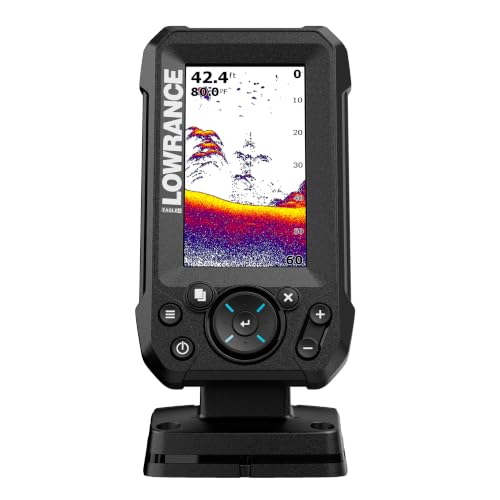
Lowrance Eagle 4X Fish Finder with Bullet Transducer | 4-inch IPS Display; wide-angle sonar coverage; autotuning sonar; easy twist-lock connector
For anglers who want a more feature-rich option within the Lowrance family, the Elite FS 9 pairs a 9-inch class display with a 3-in-1 transducer and preloaded C-MAP Contour+ charts, which suits those who plan to fish more varied waters:

Lowrance Elite FS 9 Fish Finder with Active Imaging 3-in-1 Transducer, Preloaded C-MAP Contour+ Charts
A third route is to buy a display and transducer separately from a different manufacturer, but that adds matching work and is usually best left to experienced installers. Mounting is another consideration: transom, trolling motor and through-hull options each have different installation steps, and the correct mount depends on your boat and motor. Since electrical and boat installation can affect safety and warranty coverage, consult a marine electronics professional or the manufacturer’s installation manual before drilling or wiring.
FAQ
Does the Eagle Eye 9 include a transducer?
Yes. The listing describes one included transducer that supports CHIRP and DownScan with FishReveal, so you do not need to purchase a separate transducer to start using the unit.
What is the difference between Live Forward and Live Down?
Live Forward shows what is ahead of the transducer in a more current view, while Live Down shows the water directly below. Both are designed to give a real-time look at fish and structure rather than a scrolling history.
Is CHIRP better than standard sonar?
CHIRP sends a range of frequencies and is generally regarded as better at separating closely spaced targets. Standard sonar can still be useful, but CHIRP is the more common choice for detailed fish finding.
Does this unit come with charts?
Yes. The listing includes C-MAP Inland charts, which are intended for lakes, rivers and similar inland waters.
Can I use it on a kayak?
Many kayak anglers use a 9-inch class fish finder, but power, mounting and screen visibility all need planning. Confirm your battery setup and mount type before buying, and check the manufacturer’s power requirements.
Is it suitable for saltwater?
The product is described as suited to lakes, rivers, reservoirs and inshore use. Anglers focused on deep offshore saltwater should look at larger chartplotter platforms with broader mapping coverage.
How hard is it to install?
Installation depends on the mount you choose. Transom and trolling motor mounts are the most common, and the process is manageable for many owners. Because wiring and mounting affect safety, consult a marine electronics professional if you are unsure.
Final Verdict
The Lowrance Eagle Eye 9 is a practical lowrance fish finder with transducer for anglers who want a large, readable screen, Live Forward and Live Down views and CHIRP and DownScan sonar from one included transducer. It fits lake, river and inshore fishing well, and it is a sensible first step for buyers who want an all-in-one kit. It is not the right tool for large offshore boats or multi-display networks, and those buyers should look at the larger Lowrance families instead.
View on AmazonBefore buying, confirm your mounting method, power setup and the waters you fish most often. A quick check of those three points will tell you whether this model fits your boat and your fishing.
Before you buy: helpful guides
- Lowrance Elite Fs 12 Fish Finder/chartplotter with Totalscan Transducer: A Practical Guide (2026)
- Lowrance Fish Finder Hook 4x: Setup, Settings and Buying Tips (2026)
- Fish Finder Fishing Charters: How to Pick the Right Trip (2026)
- Humminbird ICE 35 Fish Finder: Setup, Use and Ice Fishing Tips
- Fish Finder Float Tube Setup: A Step-by-Step Guide for Beginners
About Caleb Morgan
Caleb Morgan is part of our editorial team and reviews and edits our saltwater fishing guides, checking product details against manufacturer specifications and owner feedback.
About the author
Caleb Morgan writes reviews and buying guides for Saltwater Fishing.