6 Best Bucktail Hairs for Jig Tying (2026)
Compare six bucktail hair options for jig tying, from fly tying kits to saltwater-ready packs. Learn what matters in color, length, and hair quality before you
 By Audrey Hayes
Updated November 22, 2026
 By Audrey Hayes
Updated November 2026
Choosing bucktail hair for jig tying comes down to four things: hair quality, color range, fiber length and how the hair ties and holds on the hook. This list covers six options, from multi-color fly tying kits to ready-to-fish saltwater jig packs, so you can match the hair to the jigs you plan to build.
Best overall: Faux Bucktail Fly Tying Materials Kit – View on Amazon
Our top picks at a glance
- 1TOP CHOICEBest overallFaux Bucktail Fly Tying Materials Kit –12 & 16 Colors Synthetic BucktaView on Amazon
- 2
 TOP CHOICEBest for color varietyTigofly 16 Colors Synthetic Fiber Large Hank Super Hair Fly Tying BuckView on Amazon
- 3
 TOP CHOICEBest for two-tone patternsTigofly 12 pcs Double Color Synthetic Fiber Super Hair Fly Tying MaterialsView on Amazon
- 4
 Best for saltwater surf jigsDr.Fish 3 Pack Bucktail Jig Saltwater Fishing Jig Buck Tail Hair Lure Surf Fishing 1/4ozView on Amazon
- 5
 Best for baitfish profileNorthland Fishing Tackle Minnesota Mullet Hair Jig Fishing Lure, 3/4 Oz Green BluegillView on Amazon
- 6
 Best for swimming pink and purple patternsNatufish Bucktail Jigs 3Pcs Hair Jig Lure Hooks,Surf Fishing Hair SwimView on Amazon
Our Top Picks
Quick Comparison
| Product | Best for | Key feature |
|---|---|---|
| Faux Bucktail Fly Tying Materials Kit | Building a wide range of jig colors | 12 and 16 color sets |
| Tigofly 16 Colors Synthetic Fiber Large Hank | Mixing light and natural tones | Large hanks, eight light colors |
| Tigofly 12 pcs Double Color Super Hair | Two-tone jig bodies | Double-color synthetic strands |
| Dr.Fish 3 Pack Bucktail Jig | Surf and striper fishing | Ready-tied 1/4 oz jigs |
| Northland Minnesota Mullet Hair Jig | Baitfish imitation | Pulsing hair action, 3/4 oz |
| Natufish Bucktail Jigs 3Pcs | Pink and purple patterns | 1/4 oz, three-pack |
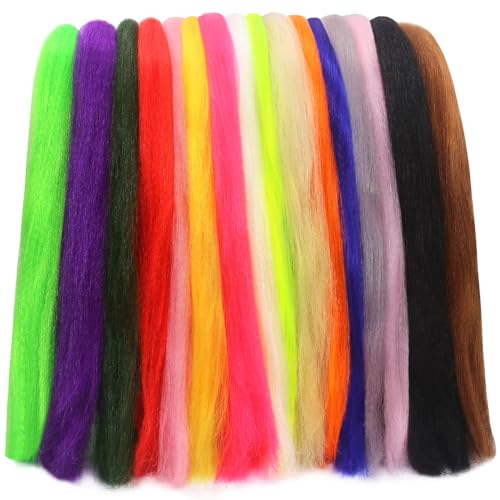
Faux Bucktail Fly Tying Materials Kit –12 & 16 Colors Synthetic Bucktail Hair for Fly Fishing Jig & Streamer Lure Making
Faux Bucktail Fly Tying Materials Kit –12 & 16 Colors Synthetic Bucktail Hair for Fly Fishing Jig & Streamer Lure Making Making (16-Color Set)
Best for: Building a wide range of jig colors from one purchase.
This kit suits tiers who want to experiment with color combinations without buying hair separately. It is a practical starting point for anglers building their first batch of jigs.
Pros
- Offered in 12 and 16 color sets
- Works for jig and streamer patterns
Cons
- Synthetic hair may not match natural bucktail feel
Tigofly 16 Colors Synthetic Fiber Large Hank Super Hair Fly Tying Bucktail Jig Lure Making Materials
Tigofly 16 Colors Synthetic Fiber Large Hank Super Hair Fly Tying Bucktail Jig Lure Making Materials (8 Light Colors)
Best for: Mixing light and natural tones.
Anglers who fish clear or shallow water often want pale, natural colors. This hank set leans toward light shades that suit baitfish imitation.
Pros
- Large hanks provide plenty of material per color
- Eight light colors suit clear-water patterns
Cons
- Dark colors are limited in this set
Tigofly 12 pcs Double Color Synthetic Fiber Super Hair Fly Tying Materials
Tigofly 12 pcs Double Color Synthetic Fiber Super Hair Fly Tying Materials | Large Hank, Bucktail Jig Lure Making, Streamers Fly Fishing, Fly Tying Hair
Best for: Two-tone jig bodies.
Tiers who want a darker back and lighter belly will find this set useful. Each strand carries two colors, which simplifies two-tone patterns.
Pros
- Double-color strands reduce the need for mixing
- Large hank format for full jig bodies
Cons
- Color pairings are fixed, so customizing is limited
Dr.Fish 3 Pack Bucktail Jig Saltwater Fishing Jig Buck Tail Hair Lure Surf Fishing 1/4oz
Dr.Fish 3 Pack Bucktail Jig Saltwater Fishing Jig Buck Tail Hair Lure Surf Fishing Bass/Striper/Mackerel/Halibut/Flouder Lure 1/4oz
Best for: Surf and striper fishing.
Anglers who want ready-to-fish jigs for surf work will find this pack handy. It is useful as a reference for jig weight and hair length when tying your own.
Pros
- Three jigs in a 1/4 oz size for surf use
- Ready to fish out of the package
Cons
- Not a source of loose hair for tying
Northland Fishing Tackle Minnesota Mullet Hair Jig Fishing Lure, 3/4 Oz Green Bluegill
Northland Fishing Tackle Minnesota Mullet Hair Jig Fishing Lure, Lifelike Pulsing Action Bucktail Jig for Bass, Northern Pike, 3/4 Oz, Green Bluegill
Best for: Baitfish imitation.
This heavier jig is built to pulse through the water column. Anglers targeting larger predators may use it as a model for hair density and profile.
Pros
- Pulsing hair action at 3/4 oz
- Green bluegill color suits natural forage
Cons
- Heavier weight is less suited to light tackle
Buying Guide
Hair Quality and Fiber Feel
Look for synthetic hair that is soft but still has enough body to hold a tapered shape around the hook shank. Fine, flexible fibers tend to produce a more lifelike pulse in the water, while stiffer fibers hold their shape better when you are building dense, full-bodied jigs.
Check whether the hair is sold in hanks that are easy to separate. Hair that tangles or sheds heavily can slow down your tying and waste material.
Color Range and Pattern Options
A wide color selection gives you more ways to match baitfish in different water clarity and light conditions. Kits with many colors are useful if you tie a variety of patterns, while smaller sets can be enough if you already know which colors you fish most often.
Double-color or two-tone hair lets you build back-and-belly patterns in a single section of material, which can save time when you want realistic shading.
Fiber Length and Hank Size
Think about the jig sizes you plan to tie. Longer fibers suit larger jigs and saltwater profiles, while shorter fibers work better for small jigs and finesse presentations. Large hanks give you more material per color, which is helpful if you tie often.
Ready-to-Fish Jigs Versus Bulk Materials
If you are new to jig tying or just need a few jigs for an upcoming trip, pre-tied options save time and remove the learning curve around hook selection and hair tying. If you enjoy building your own lures, bulk hair and kits give you far more flexibility and lower the cost per jig over time.
Hook Compatibility and Intended Target Fish
Match the hair to the hook size and the species you target. Saltwater jigs often need heavier hooks and fuller hair profiles, while freshwater species like bass or pike may call for more compact, lifelike shapes. Confirm that the jig weight and hook style suit your fishing conditions before you commit to a material.
FAQ
What is bucktail hair for jig tying?
Bucktail hair is the fiber used to dress the head and body of a jig, creating the lifelike profile that attracts fish. Many modern options are synthetic, which are easier to color, more consistent in texture, and often more affordable than natural deer hair. Synthetic versions are widely used in both freshwater and saltwater jig building.
Is synthetic bucktail hair as effective as natural deer hair?
Synthetic hair can perform very well and is often preferred for its durability, consistent color and wide range of options. Natural deer hair has a traditional look and can be effective, but it may vary more in texture and can absorb water. Your choice often comes down to personal preference and the style of jig you plan to build.
How much bucktail hair do I need for one jig?
The amount depends on the size of the jig and how full you want the dressing to be. Small jigs may need only a small pinch of fiber, while larger saltwater jigs require more. Starting with a modest amount and adding more as you tie will help you avoid waste.
Can beginners learn jig tying with these materials?
Yes, beginners can get started with jig tying using basic hair and a simple set of tools. Practicing on a few inexpensive hooks will help you learn how to tie the hair securely and shape the dressing. Pre-made jigs are also a good option while you build your skills.
How should I store bucktail hair so it lasts?
Keep hair in a dry, dust-free container away from direct sunlight and heat. Sealed bags or small storage boxes help keep colors from fading and prevent tangling. Organizing hanks by color also makes it faster to find what you need when you sit down to tie.
Conclusion
If you want a broad selection of colors for building many different jig patterns, the larger multi-color kits and hank sets are the best fit for regular tyers. Two-tone options suit anglers who want realistic back-and-belly shading in a single material.
For anglers who prefer to fish right away, the ready-made saltwater and freshwater jigs are the simplest choice. Each option serves a different need, so match your pick to your experience level, target species and how much tying you plan to do.
Related reading
- Tying a Bucktail Jig: A Step-by-Step Guide for Saltwater Anglers
- How to Dye Bucktail Jig Hair: A Step-by-Step Guide for Saltwater Anglers
- Bucktail Jig Tying Tips: How to Tie a Durable, Better-Swimming Jig
- What Will a Bucktail Jig Catch? Species, Sizes and Best Uses
- What Size Bucktail Jig for Stripers: A Practical Guide by Water Type
About Audrey Hayes
Audrey Hayes is part of our editorial team and reviews and edits our saltwater fishing guides, checking product details against manufacturer specifications and owner feedback.
About the author
Audrey Hayes writes reviews and buying guides for Saltwater Fishing.