6 Best Bucktail Jig Making Supplies of 2026
Compare six bucktail jig making supplies, from synthetic hair kits to crappie jig heads, and see which setup fits your tying and fishing needs.
 By Audrey Hayes
Updated November 20, 2026
 By Audrey Hayes
Updated November 2026
Bucktail jig making supplies cover everything you need to tie or assemble your own jigs: hair, jig heads, legs, flash, and dyes. This list compares six kits and finished-jig options based on product listings, brand reputation, and common owner feedback. The selection criteria were color variety, material type, suitability for saltwater-style jigs, and how much tying work each option leaves to you.
Our top picks at a glance
- 1TOP CHOICEBest overallFaux Bucktail Fly Tying Materials Kit –12 & 16 Colors Synthetic BucktaView on Amazon
- 2
 TOP CHOICEBest for large-hank tyingTigofly 16 Colors Synthetic Fiber Large Hank Super Hair Fly Tying BuckView on Amazon
- 3
 TOP CHOICEBest for double-color patternsTigofly 12 pcs Double Color Synthetic Fiber Super Hair Fly Tying MaterialsView on Amazon
- 4
 Best for flash and sparkleLURELINK Crystal Flash Chenille Fly Tying Materials 16 ColorsView on Amazon
- 5
 Best for silicone legsRubber Legs Fly Tying Materials 12 Colors Silicone LegsView on Amazon
- 6
 Best ready-made optionDovesun Crappie Jigs Hand-Tied Hair Jigs 10 Colors Bucktail Crappie Jig HeadsView on Amazon
Our Top Picks
Quick Comparison
| Product | Best for | Key feature |
|---|---|---|
| Faux Bucktail Fly Tying Materials Kit | Overall tying kit | 12 and 16 color sets |
| Tigofly 16 Colors Synthetic Fiber Large Hank | Large-hank tying | 16 colors, large hanks |
| Tigofly 12 pcs Double Color Synthetic Fiber Super Hair | Double-color patterns | Two-tone synthetic hair |
| LURELINK Crystal Flash Chenille Fly Tying Materials | Flash and sparkle | 16 colors of chenille |
| Rubber Legs Fly Tying Materials 12 Colors | Silicone legs | Embossed silicone legs |
| Dovesun Crappie Jigs Hand-Tied Hair Jigs | Ready-made jigs | Pre-tied hair jigs |
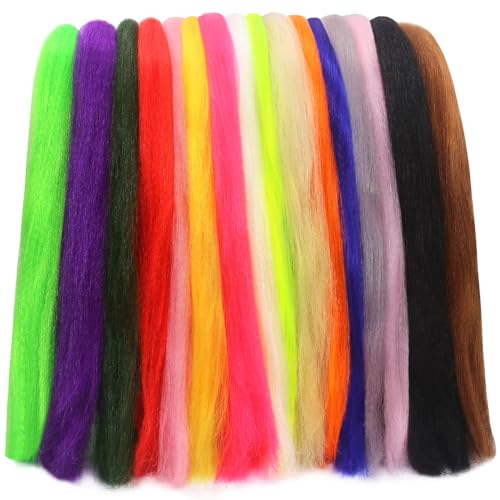
Faux Bucktail Fly Tying Materials Kit –12 & 16 Colors Synthetic Bucktail Hair for Fly Fishing Jig & Streamer Lure Making
Faux Bucktail Fly Tying Materials Kit –12 & 16 Colors Synthetic Bucktail Hair for Fly Fishing Jig & Streamer Lure Making Making (16-Color Set)
Best for: Overall tying kit
This suits anglers who want a broad color range in one purchase and plan to tie a variety of jig and streamer patterns.
Pros
- Wide color selection covers most saltwater baitfish tones.
- Synthetic hair holds shape well after tying.
Cons
- Hair lengths may need trimming for smaller jigs.
Tigofly 16 Colors Synthetic Fiber Large Hank Super Hair Fly Tying Bucktail Jig Lure Making Materials
Tigofly 16 Colors Synthetic Fiber Large Hank Super Hair Fly Tying Bucktail Jig Lure Making Materials (16 Colors)
Best for: Large-hank tying
This is a good fit for tiers who make many jigs at once and want generous hank sizes for bulk work.
Pros
- Large hanks yield plenty of material per color.
- Good color spread for mixing custom patterns.
Cons
- Large hanks take up more storage space.
Tigofly 12 pcs Double Color Synthetic Fiber Super Hair Fly Tying Materials
Tigofly 12 pcs Double Color Synthetic Fiber Super Hair Fly Tying Materials | Large Hank, Bucktail Jig Lure Making, Streamers Fly Fishing, Fly Tying Hair
Best for: Double-color patterns
Anglers who prefer two-tone baitfish imitations will find this set useful for building layered looks without buying separate colors.
Pros
- Two-tone hair mimics the back-and-belly contrast of baitfish.
- Large hanks support full-bodied jigs.
Cons
- Limited to 12 pieces, so color choice is narrower.
LURELINK Crystal Flash Chenille Fly Tying Materials 16 Colors
LURELINK-Crystal-Flash-Chenille-Fly-Tying-Materials-16-Colors-Sparkling-Chenille-for -Crappie -Jig Making Supplies & Fly Patterns (16-Colors)
Best for: Flash and sparkle
This works for anglers adding flash and chenille accents to jigs, especially for species that respond to reflective profiles.
Pros
- Sixteen colors give flexible accent options.
- Chenille adds body and movement to jig heads.
Cons
- Flash-only materials do not replace bucktail bulk.
Rubber Legs Fly Tying Materials 12 Colors Silicone Legs
Rubber-Legs-Fly-Tying-Materials-12-Colors-Silicone-Legs-for-Fly-Tying-Flies & Jigs Trout Bass Panfish Lure Making Supplies Kit (12 Advanced Embossed Set)
Best for: Silicone legs
Tiers who want built-in action from silicone legs will get a practical range of colors and textures in this kit.
Pros
- Embossed texture adds realistic detail.
- Good color range for trout, bass, and panfish patterns.
Cons
- Silicone legs need careful handling to avoid tearing.
Dovesun Crappie Jigs Hand-Tied Hair Jigs 10 Colors Bucktail Crappie Jig Heads
Dovesun Crappie Jigs Hand-Tied Hair Jigs 10 Colors Fishing Jigs Bucktail Crappie Jig Heads for Trout, Walleye and Panfish Fishing #2-1/8oz*40pcs
Best for: Ready-made option
This suits anglers who want to skip the tying process and still fish hair jigs, or who need spares quickly.
Pros
- Pre-tied jigs save time for anglers who do not tie.
- Forty pieces give a useful spare count.
Cons
- Limited control over custom hair and color combinations.
Buying Guide
Hair Type and Material
Synthetic bucktail hair is the most common choice for jig making because it is consistent in length, holds its shape, and is easy to find in many colors. Check whether a kit includes large hanks of hair suited to bucktail jigs or thinner strands better suited to smaller flies, since that determines what you can realistically tie.
Color Range and Variety
A wider palette lets you match baitfish and water conditions without buying additional packs. Kits with 12 to 16 colors cover most natural patterns, while two-tone or double-color hair adds extra options for a more lifelike profile.
Included Components Versus Bulk Materials
Some options are hair or flash only, while others bundle legs, chenille, or finished jig heads. If you already own jig heads and hooks, a materials-only kit may be the better value; if you are starting from scratch, a kit with more components can save you from sourcing each part separately.
Suitability for Your Target Fish
Think about what you plan to catch. Crappie, panfish, trout, and bass each favor different jig sizes and profiles, so match the materials and sizes in the kit to the species you fish most often.
Skill Level and Tying Effort
Beginners often benefit from pre-tied or hand-tied finished jigs, which require no tying at all. More experienced makers can get more out of bulk hair, legs, and flash, which allow custom builds but demand more time and practice.
FAQ
Do I need special tools to start making bucktail jigs?
At minimum you will need a vise, thread, bobbin, scissors, and a bodkin or head cement for finishing. Basic jig heads and hooks are also required if your kit does not include them. Many beginners start with a simple vise and a small set of tools before adding more specialized equipment.
Is synthetic hair as good as natural bucktail?
Synthetic hair is widely used because it is uniform, affordable, and available in many colors, and it holds up well with repeated use. Natural bucktail has a distinct texture that some anglers prefer, but it varies in quality and can be harder to work with. Your choice often comes down to budget and personal preference.
How much material do I need for one jig?
A single bucktail jig typically uses a small pinch of hair, so a large hank can produce many jigs. The exact amount depends on jig size and how full you want the tail to be. Keeping a few colors on hand in larger quantities is often more economical than buying many small packs.
Can I use these supplies for flies as well as jigs?
Many of these materials, especially synthetic hair, chenille, and flash, are used in both fly tying and jig making. Some items, such as the larger hanks, are better suited to bucktail jigs and streamers than to small trout flies. Check the product description for the sizes and intended uses before buying.
Should I buy a kit or individual materials?
Kits offer variety and a good starting point at a lower cost per item, which suits most beginners. Buying individual materials makes sense once you know which colors and types you use most. Many experienced makers start with a kit and then restock their favorites.
Conclusion
For beginners who want variety and a complete starting point, the 16-color kits and the double-color set offer the most flexibility for building jigs from scratch. Anglers who already have jig heads and want ready-made options for specific species will find the crappie-focused and hand-tied jigs more convenient.
Experienced tiers looking to customize their own patterns may get the most from the large-hank hair packs and the silicone legs, while those targeting panfish or trout can focus on the kits built for those species. Matching the kit to your skill level and target fish will help you get the most value from your purchase.
Related reading
- Making a Bucktail Jig: A Step-by-Step Guide for Saltwater Anglers
- What Will a Bucktail Jig Catch? Species, Sizes and Best Uses
- What Size Bucktail Jig for Stripers: A Practical Guide by Water Type
- What Can You Catch with a Bucktail Jig? Species and Tips
- Walleye Bucktail Jig Colors: How to Pick the Right One by Water and Light
- Vmc Bucktail Jig Walleye: How to Choose and Fish Them (Step-by-Step)
About Audrey Hayes
Audrey Hayes is part of our editorial team and reviews and edits our saltwater fishing guides, checking product details against manufacturer specifications and owner feedback.
About the author
Audrey Hayes writes reviews and buying guides for Saltwater Fishing.